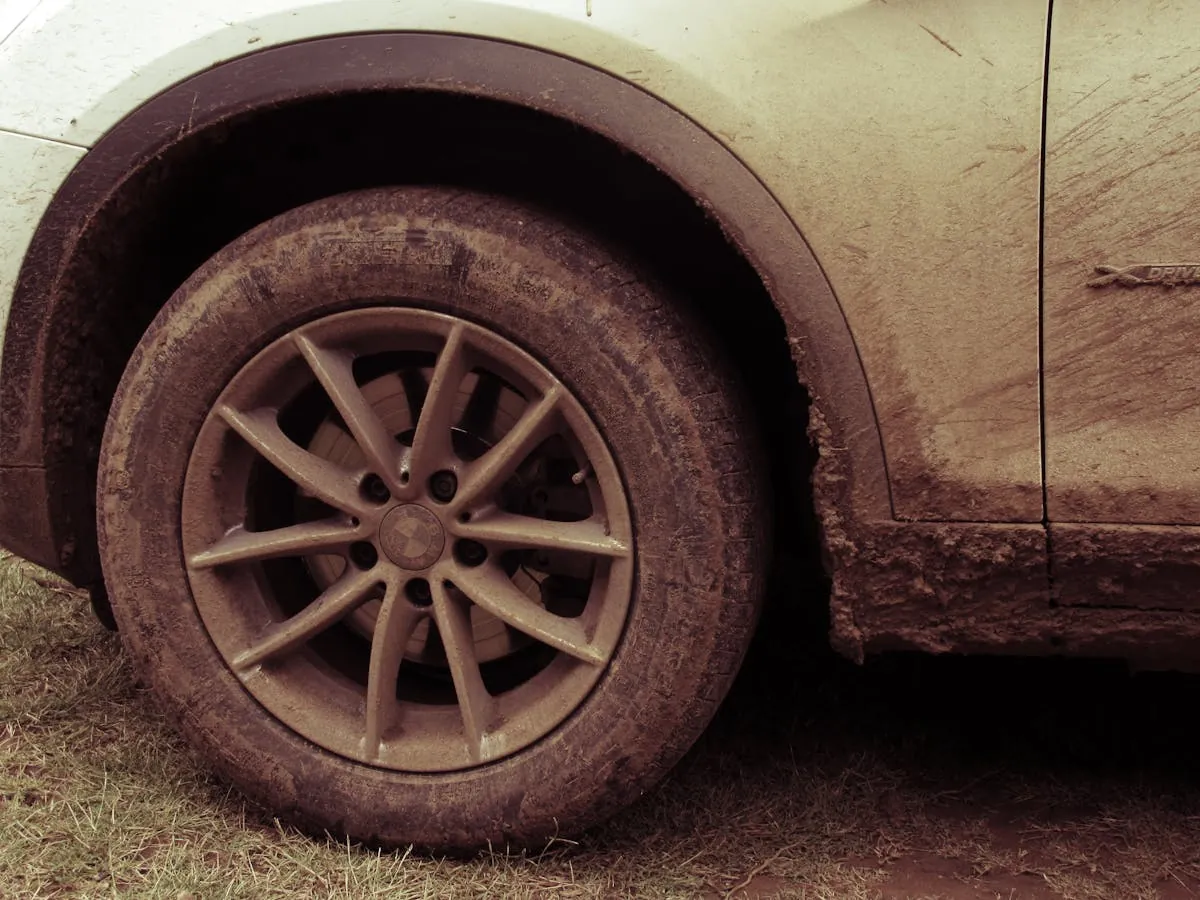
Sidewall damage cannot be safely repaired, the tyre needs replacing. Unlike the tread, the sidewall flexes with every turn of the wheel, hundreds of times a minute at road speed, and carries the car's load. A repair there can't restore that strength, and a failed sidewall repair can blow out at speed. UK repair standards only permit repairs in the central tread area, never the sidewall.
It's not what anyone wants to hear when a bulge appears, but understanding why makes the safety case obvious. Here are the types of damage, the reason the sidewall can't be patched, what causes it, and where the law stands.
Types of sidewall damage
Sidewall damage shows up in a few distinct ways, and all of them point to replacement:
- Bulges or blisters: the internal cords have broken, usually after a pothole or kerb strike. Replace immediately.
- Cuts and gouges: anything deep enough to reach the cords beneath the rubber.
- Cracking ("crazing"): perished rubber from age or UV exposure.
- Sidewall punctures: any puncture outside the safe central repair zone.
Why the sidewall can't be repaired
The tread sits on a stiff steel-belt package, which is why a central tread puncture can be safely patched. The sidewall has no such reinforcement, it's designed to flex as the tyre rolls and absorbs bumps. A plug or patch there creates a weak point that heat and constant flexing will eventually tear open, often without warning. This is why the British Standard for tyre repair (BS AU 159) confines repairs to the central tread, and no reputable fitter will touch the sidewall.
What causes sidewall damage?
Kerbing the wheel, hitting potholes at speed, and persistent under-inflation are the big three causes. Under-inflation is the sneaky one: a soft tyre flexes excessively, overheating the sidewall and weakening it from the inside long before any damage shows. If you've recently hit a pothole and noticed a bulge, stop driving on that tyre, because the cords have already failed. Low-profile tyres on large alloys are the most vulnerable, because there is less sidewall to absorb the impact before the cords take it.
Is it legal to drive on?
No. A bulge or lump in the sidewall is illegal in its own right under the tyre safety law (GOV.UK), regardless of how much tread the tyre has. It's an automatic MOT failure and can earn a fine and penalty points, on top of the obvious safety risk. A cut deep enough to reach the cords is treated the same way. In short, sidewall damage takes the tyre off the road immediately.
How to inspect a sidewall properly
Sidewall damage is easy to miss if only the outer face is checked, and only from standing height. A thorough check takes a few minutes per wheel and needs nothing more than daylight and a torch.
- Turn the steering to full lock so the inner sidewall of each front tyre is visible. Kerb strikes and pothole bulges can show on the inside face.
- Crouch and look along the sidewall against the light, rather than straight at it. A bulge that is invisible head-on stands out in profile.
- Run a gloved hand around the whole circumference, inside and out. You will feel a lump, a split or an embedded object before you see it.
- Roll the car forward half a wheel turn and repeat, because the part of the tyre on the ground is hidden.
- Check the rears the same way, using the torch for the inner face, and do not forget the spare.
Do this after any impact hard enough to feel through the steering, before a long trip, and as part of the monthly pressure check. If you find anything you are not sure about, photograph it with a coin for scale and get it looked at before driving further.
What the repair standard allows
BS AU 159, the British Standard for tyre repair, draws the line at the central three-quarters of the tread and a hole no larger than 6mm. Everything outside that zone, and any tyre that has been driven on flat, is a replacement. This table is the short version of the standard as it applies to car tyres:
| Area of the tyre | Damage | Repairable? |
|---|---|---|
| Central three-quarters of the tread | Puncture up to 6mm, tyre not run flat | Yes, with a proper plug-and-patch from inside |
| Central tread | Puncture larger than 6mm, or multiple holes close together | No |
| Shoulder (outer eighth of the tread each side) | Any puncture | No |
| Sidewall | Any puncture, cut, bulge or crack reaching cord | No |
| Bead (where the tyre seals to the rim) | Any damage | No |
| Any area | Tyre driven while flat, with internal rubbing or creasing | No |
Aerosol sealants and external "string" plugs do not meet the standard, because a repair has to be done from inside the tyre, after the tyre has been removed and inspected for internal damage. That inspection is the reason a fitter will not quote you for a repair without seeing the tyre off the wheel.
Our puncture repair service works to the standard, and tyre repair vs replacement explains how we decide.
Scuffs and marks that are not serious
Not every mark on a sidewall means the tyre is finished, and a common false alarm is an indentation that goes inwards rather than a bulge that sticks out. Knowing the difference saves an unnecessary replacement.
- Shallow indentations or ripples in the sidewall are usually the joins in the casing plies showing through, and they are normal on many tyres. A dimple that goes in is not a structural fault. A lump that comes out is.
- Light kerb scuffs that have rubbed away surface rubber without cutting into it, and without exposing any fabric or cord, are cosmetic. Keep an eye on them.
- Small rubber whiskers and moulding lines are left over from manufacture and mean nothing.
- Faint surface crazing from age is worth monitoring but is not in itself a failure, see cracked and perished tyres.
The tests that matter are depth and shape. Press a fingernail into a cut: if it disappears into the rubber or you can see fabric at the bottom, the tyre is compromised. Run a hand across a mark: if it stands proud of the surface, it is a bulge and the tyre comes off.
If it is flush or slightly recessed and the rubber is intact, it is very likely cosmetic. When in doubt, have it inspected rather than guessing.
If you find a bulge away from home
A bulge can fail at any moment, so do not drive on it at speed; if you have a spare, fit it on firm, level ground well away from traffic. Our guide on what to do about a bulge covers the next steps.
Don't risk it, replace it
A bulging sidewall can let go without warning, often at motorway speed where it's most dangerous. Our broken tyre and burst tyre services bring a replacement to where the car is safely parked, from our one base at Brent Cross, NW2; call and we will tell you whether we can take the job and give you an arrival time.
