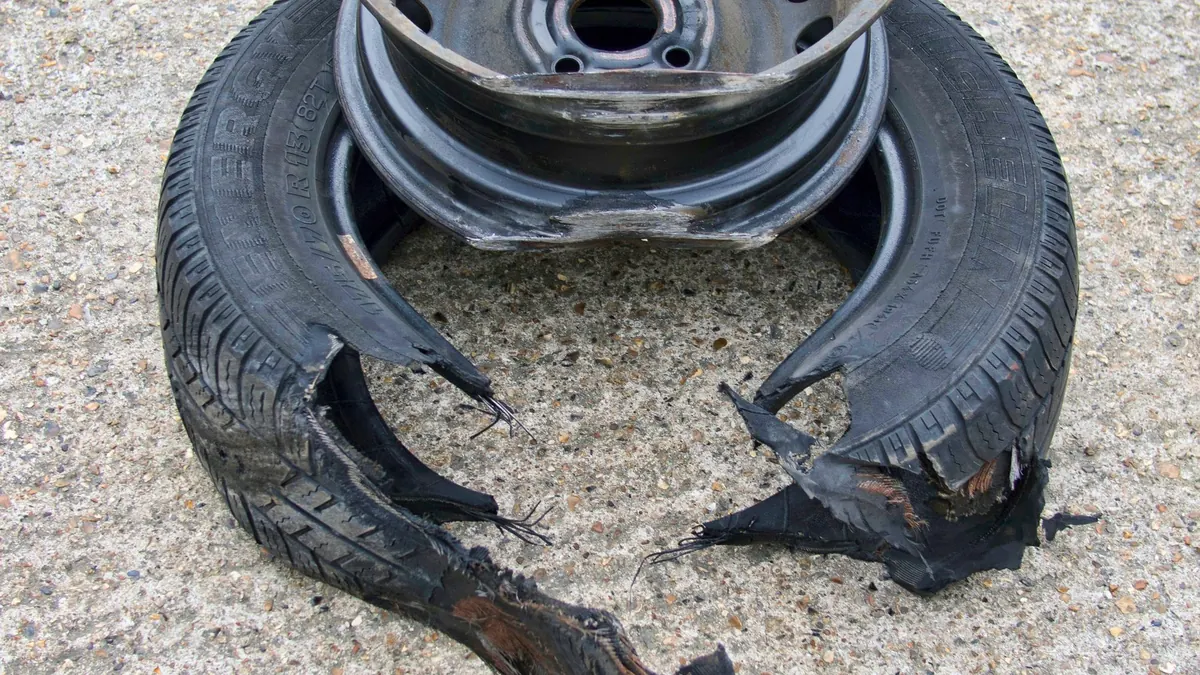
Most blowouts can be prevented with simple checks. A tyre rarely bursts without warning; the conditions usually build up over time. Knowing the causes lets you stop one happening, especially before fast, hot or heavily loaded journeys where a marginal tyre is most likely to let go.
The main causes
Most blowouts trace back to one of these, and most are easy to check for:
- Under-inflation. One of the most common causes. A soft tyre flexes and overheats until the structure fails, which is why TyreSafe puts correct pressure at the heart of tyre safety. Check pressures monthly.
- Worn or aged tyres. Low tread and perished rubber are far more likely to let go.
- Overloading. Exceeding the load rating, or not using laden pressures on a full car.
- Impact and hidden damage. Potholes and kerbs can cause an internal bulge that fails later.
- Heat and speed. Long, fast summer drives push a marginal tyre over the edge.
How to prevent a blowout
A short routine removes most of the risk:
- Check pressures monthly and before long trips, when cold.
- Inspect tread with the 20p test and look for cracks and bulges.
- Don't overload, and use the laden pressure for a full car.
- Replace tyres that are old, worn or damaged before they fail.
- Take breaks on long drives to let tyres cool and to spot issues.
Warning signs before a blowout
Because most blowouts build up rather than strike from nowhere, there are often clues in the days or weeks beforehand. A tyre that keeps needing air points to a slow puncture weakening the structure. A bulge or blister in the sidewall means the cords have already failed and the tyre can let go at any time. Vibration, a persistent TPMS warning, or cracking in the rubber are all reasons to get a tyre checked before a long drive. Catching any of these early is the difference between a planned replacement and a roadside emergency. It's worth paying particular attention before the situations that expose a weak tyre: a fully loaded car, a long motorway run, a tow, or a spell of hot weather. A tyre that copes fine with short local trips can fail under sustained speed and heat, so a five-minute check before a big journey is the cheapest insurance there is.
If it happens anyway
Know what to do in a blowout: don't brake hard, keep straight, ease off the accelerator and steer to safety. Then call for help rather than risking a roadside wheel change beside live traffic.
How under-inflation destroys a tyre
A soft tyre fails because it flexes too much, and flexing makes heat. At the correct pressure the sidewall bends a little with each revolution and the heat that generates is carried away. Drop the pressure and the sidewall bends further, the rubber and the steel belts rub against each other inside the casing, and the temperature climbs. Rubber loses strength as it heats, the bond between the plies weakens, and eventually the casing lets go, often on the sidewall and often at speed.
The reasons it catches people out:
- Tyres lose a little air every month through the rubber itself, so a tyre that was right in spring can be well down by summer.
- A tyre can be visibly fine and still be well under pressure; low-profile tyres barely change shape.
- The car's TPMS warns late, at a threshold well below the correct figure, so it is a safety net, not a replacement for a gauge.
- A slow puncture does the same damage gradually, which is why a tyre that "just needs a bit of air every week" needs inspecting, not topping up.
Pressures are on the door placard, the fuel flap or the handbook, and should be checked cold. If you fill up at a garage after a motorway run, the tyres are warm and will read higher than they really are.
Tyres that sit: second cars, caravans and spares
A tyre ages whether or not it is used, and the ones that fail from age are usually on vehicles that spend most of their life parked. Caravans, trailers, motorhomes, classic cars and the second car that does the school run all fit the pattern: plenty of tread, cracked sidewalls, and a long, hot motorway trip once a year that finds the weakness.
The signs to look for:
- Cracking in the sidewall or between the tread blocks, which means the rubber has hardened.
- The date code. The last four digits of the DOT string give the week and year of manufacture. Many manufacturers suggest close inspection from five years and replacement by ten, and the rules for lorries, buses and coaches ban tyres over ten years old from their front axles, which tells you how seriously age is taken.
- Flat spots from standing in one place for months, which cause vibration and can hide sidewall damage.
- The spare. Often the oldest tyre on the car, sat at low pressure for years. Check it when you check the others.
A caravan or trailer tyre also tends to be run close to its load limit, which combines badly with age.
Potholes, kerbs and hidden damage
An impact can break the cords inside a tyre without leaving a mark on the outside, and the failure comes days or weeks later. A hard pothole strike at speed, or a kerb hit while parking, pinches the sidewall between the rim and the obstacle. The rubber springs back but the cords underneath may not.
After any hard impact:
- Pull over somewhere safe and look at the tyre and the wheel rim for cuts, a bulge, or a bent lip.
- Check the pressure. A slow loss after an impact points to a damaged bead or a cracked rim.
- Over the next few days, look again. A bulge that appears later is the cords giving way and the tyre must come off the car; it is not repairable.
- Feel for new vibration at speed, which can mean a buckled wheel as well as a tyre problem.
If a pothole is the cause, photograph it and the damage: you may be able to claim from the council or National Highways, and the process is set out in how to claim for pothole damage. Tyre condition rules, including bulges and exposed cord, are on GOV.UK, and a tyre with a bulge is illegal as well as dangerous.
The before-a-long-drive checklist
Five minutes on the driveway before a motorway trip is the most effective blowout prevention there is. Blowouts cluster around long, hot, loaded journeys, so that is when to check.
| Check | What you are looking for | Action if not right |
|---|---|---|
| Pressure, cold, all four plus the spare | The placard figure, or the laden figure for a full car | Inflate; investigate any tyre that is well down |
| Tread depth | Comfortably above 1.6mm across the central three-quarters, using the 20p test | Replace before the trip, not after |
| Sidewalls, both sides | No bulges, cuts, cracking or exposed cord | Any bulge means the tyre comes off |
| Objects in the tread | Nails, screws, glass | Leave a nail in and get it inspected |
| Age | Date code under ten years, ideally well under | Replace old tyres on cars that sit |
| Load | Inside the gross vehicle weight; heavy items low and between the axles | Take something out, or use the laden pressure |
| Wheel nuts | Tight, especially after a recent tyre change | Torque to the handbook figure |
On the road, take a break every couple of hours and walk round the car. A tyre that is noticeably hotter than the others, or that has started to look low, is telling you something.
We replace burst tyres at your location
Our burst tyre service comes to you across London and the Home Counties, including evenings and weekends when the diary allows, once the car is somewhere safe off the live road, and fits a replacement there.
