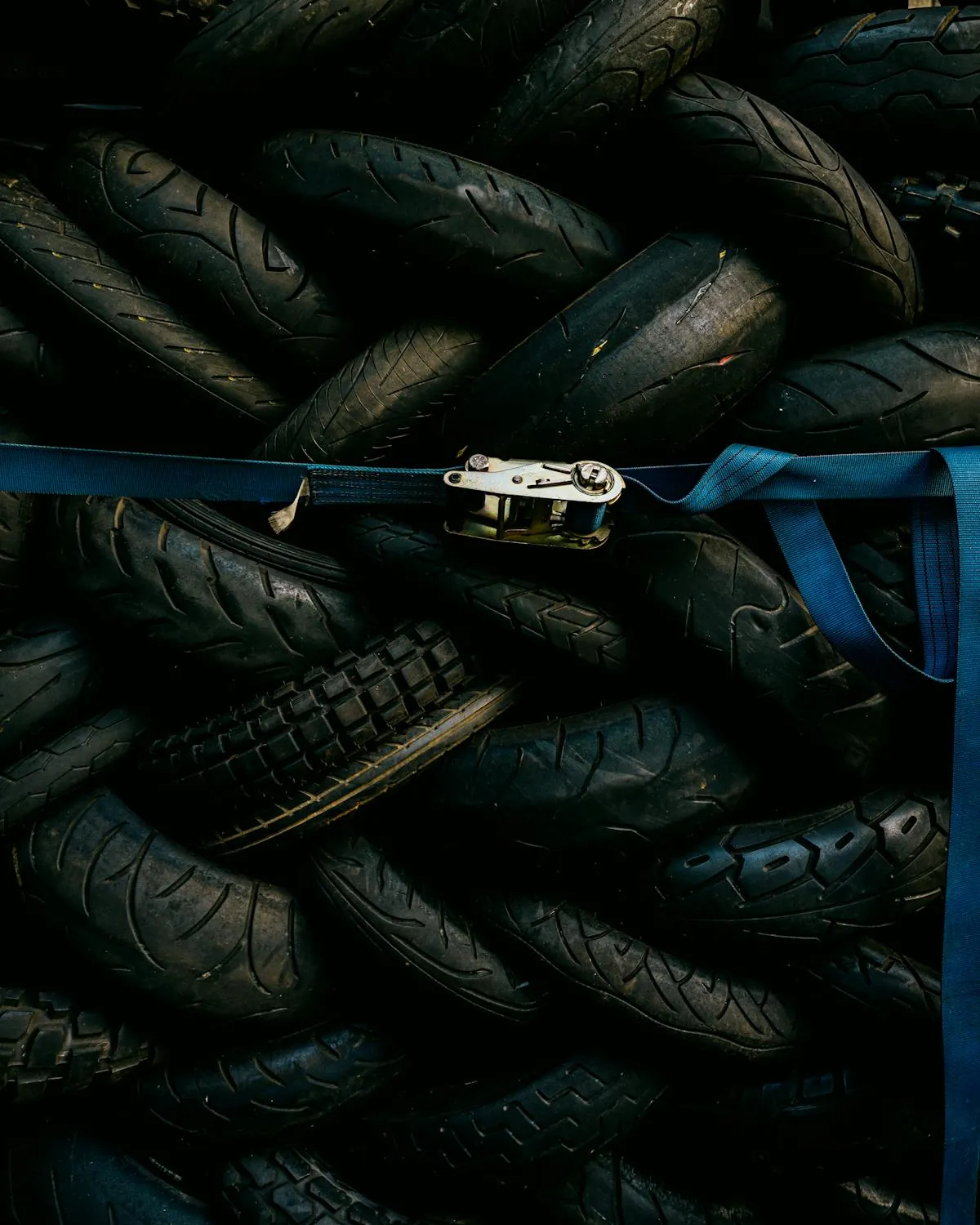
Tyres do not only wear out, they age out. The compounds that keep rubber flexible break down over time under sunlight, heat and ozone, and the visible result is cracking: fine lines at the base of the tread grooves, or a crazed pattern around the sidewall. It is common on low-mileage cars, caravans and spare wheels, where tread depth is no guide at all.
Where cracking shows first
Look in three places:
- The base of the tread grooves, where the rubber flexes as the blocks deform.
- The sidewall flex zone, roughly the middle band of the sidewall, which bends on every revolution.
- Around the bead area, particularly on tyres that have sat unused.
Cracks tend to run circumferentially, following the direction of flex. A tyre can look fine head-on and show clear crazing when you squat down and look along the sidewall in good light.
Telling cosmetic from serious
The distinction is depth and location:
- Fine surface crazing, shallow lines you can see but barely feel, on an otherwise sound tyre: monitor it. This is normal ageing.
- Deep cracks you can get a fingernail into, or that open when the sidewall is flexed by hand: replace.
- Any crack showing cords or fabric: replace immediately. The casing is compromised.
- Cracking plus a bulge: replace immediately, as in a bulge in the sidewall.
Perished rubber also feels different: harder and less elastic than a healthy tyre, and it may look dull and grey rather than black.
Why it happens
Three things drive it. UV light breaks down polymers at the surface. Ozone in the air attacks stretched rubber, which is why flex zones crack first. And heat accelerates both.
Anti-ageing compounds in the rubber migrate to the surface to protect it, and that process depends partly on the tyre being flexed. This is the counter-intuitive part: a tyre that is used regularly often ages better than one parked for years, which is why low-mileage cars and stored caravans suffer most. It is also why the date code is worth reading.
The legal position
UK law does not set a maximum age for tyres on cars, but it does require them to be free from certain defects. Cuts, lumps, bulges and any condition where the ply or cord is exposed make a tyre unroadworthy, and that applies whatever the tread depth. The requirements are set out on GOV.UK.
So a badly perished tyre with 6mm of tread can still be illegal, and it can still fail an MOT, which we cover in why tyres fail the MOT.
How to slow it down
You cannot stop ageing, but you can avoid accelerating it: keep tyres correctly inflated so the sidewall flexes as designed, park out of direct sunlight where you can, keep petrol, oil and solvents off the rubber, and avoid silicone-based tyre shine products that can dry the surface. For a stored set, follow the conditions in seasonal tyre storage.
If you are not sure whether what you are looking at is normal crazing or a problem, we will tell you straight. Book a check and we will come to you.