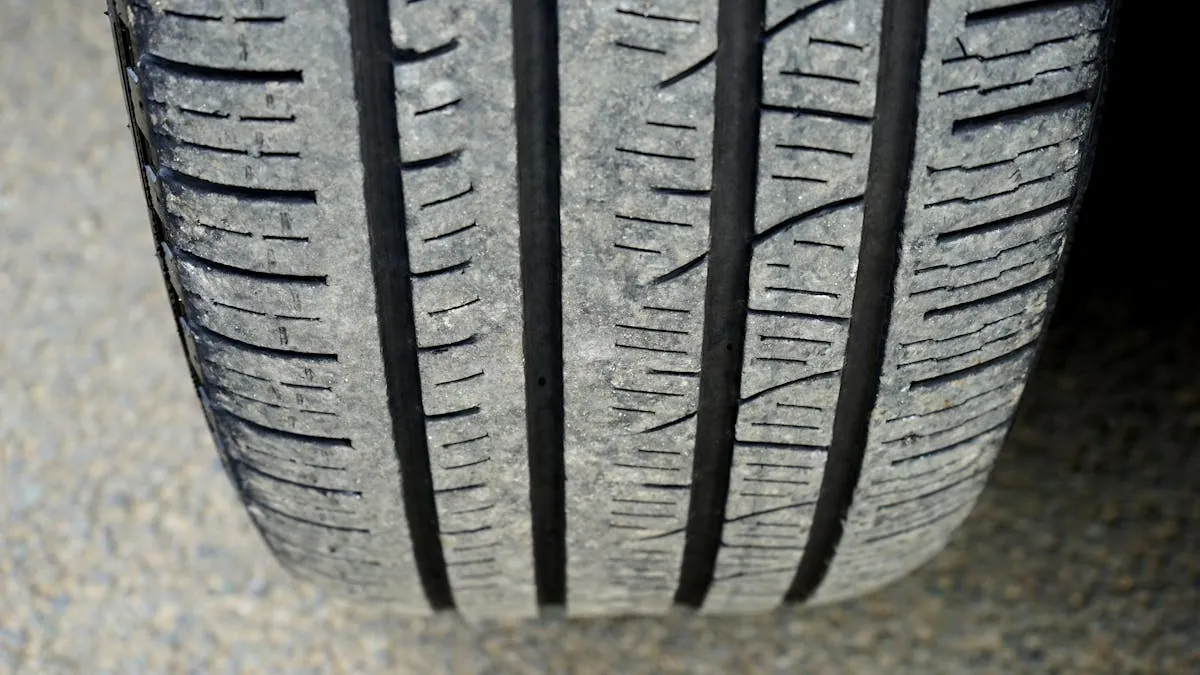
Yes, many punctures can be safely repaired, but not all of them. Under the UK standard (BS AU 159), a puncture is repairable only if it's within the central three-quarters of the tread, the hole is no more than 6mm in diameter, and the tyre has no other damage. Anything in the sidewall or shoulder, or a tyre that's been driven on while flat, generally means a replacement.
When a puncture can be repaired
A repair is on the table when all of these conditions are met, which is why a fitter checks each one:
- The damage is in the central tread area (the minor repair zone).
- The hole is 6mm or smaller.
- There's no sidewall damage, perishing or previous bad repair.
- The tyre wasn't driven flat, which overheats and weakens the structure.
- The tread is still above the legal 1.6mm minimum across the central three-quarters, and the tyre isn't perished or cracked.
A proper repair removes the tyre from the wheel so the inside can be inspected, then plugs and patches it from the inside, not just a string plug pushed in from outside.
When it can't be repaired
Some damage falls outside the safe repair zone entirely, and no reputable fitter will patch it:
- Sidewall or shoulder damage, which is never repairable.
- Holes larger than 6mm, or cuts and tears.
- Tyres below the legal tread limit anyway.
- Run-flats that have been driven while deflated.
- Bead damage, exposed cords, or a tyre whose inner liner shows the marbling and rubber dust of having run flat.
The repair zone explained
The "repair zone" isn't arbitrary, it follows the structure of the tyre. The central three-quarters of the tread sits over a stiff steel-belt package that a proper patch-plug can bond to, restoring the tyre's strength. The outer shoulders and the sidewall flex far more and have no such reinforcement, so a repair there becomes a weak point that heat and flexing will eventually open up. That's why the rule is about where the damage is, not just how big it is: a 4mm hole in the centre is repairable, while the same hole in the shoulder is not.
Why a proper repair matters
A roadside string plug pushed in from outside isn't a permanent fix and isn't to standard. A correct repair, done to the method TyreSafe recognises, is cheaper than a new tyre and lasts the life of the tyre. We follow BS AU 159 on every repair, which is why we inspect the inside before signing it off, a step you simply can't do with the tyre still on the wheel.
Repairable or not: the BS AU 159 table
BS AU 159 is the British Standard that sets out which tyre injuries may be repaired and how. The table below is how a fitter applies it to a car tyre. The standard is about location, size and condition together; a puncture has to pass on all three.
| Damage | Where | Repairable? | Why |
|---|---|---|---|
| Nail or screw, hole up to 6mm | Central three-quarters of the tread | Yes | Inside the minor repair area over the steel belts |
| Hole larger than 6mm | Anywhere | No | Too much of the belt package is cut for a patch to restore strength |
| Puncture in the shoulder | Outer eighth of the tread on each side | No | The shoulder flexes and has no belt support |
| Puncture, cut or bulge in the sidewall | Sidewall | No | The sidewall carries the load and flexes constantly |
| Tyre driven while flat | Inner liner chafed, wrinkled or marbled | No | The casing has been overheated and weakened |
| Run-flat driven deflated | Any | No | Internal damage cannot be ruled out; most makers prohibit repair |
| Tread below 1.6mm, cracking, exposed cords | Any | No | The tyre is already illegal or unsafe regardless of the puncture |
| Bead damage or a cut to the bead wires | Bead | No | The bead is what seals the tyre to the wheel |
| Second puncture | Central three-quarters, clear of the first repair | Usually yes | Repairs must not overlap, and the number allowed depends on the tyre |
| Old string plug | Central three-quarters, hole up to 6mm | Often yes | The plug is removed and the injury inspected and repaired properly |
The "central three-quarters" is measured across the tread width, so it is narrower than the size on the sidewall suggests: the 205 in 205/55 R16 is the full section width, and the tread is narrower than that. Anything outside that band is treated as shoulder or sidewall. When the injury sits right on the edge, the answer is no: the standard does not have a grey zone, and neither should a fitter.
How a proper repair is done, step by step
A BS AU 159 repair always starts with the tyre off the wheel, because the inside of the tyre tells the fitter whether it can be repaired at all. From there it follows a fixed sequence.
- Locate the injury. The tyre is inflated and checked, often with soapy water, to find the leak and confirm there is only one.
- Remove the tyre from the wheel and inspect the inner liner for chafing, marbling, cuts or previous repairs.
- Remove the object and check the angle of the injury. A nail that went in at a steep angle can exit the belt package outside the repair area even when the tread hole looks central.
- Prepare the hole. The injury channel is cleaned out with a carbide cutter so the plug bonds to fresh rubber.
- Buff and clean the liner around the hole, then apply vulcanising cement.
- Fit a combination patch-plug (often called a mushroom plug) from the inside. The stem fills the channel and the patch seals the liner, so water cannot reach the steel belts.
- Seal, refit and balance. The repair is sealed over, the tyre goes back on the wheel with a new valve, and the wheel is balanced because the plug and patch change its weight slightly.
The whole job takes a mobile fitter around half an hour. If step 2 turns up internal damage, the repair stops there and the honest answer is a replacement.
Sealants, string plugs and other quick fixes
Quick fixes are for getting you off the road, not for keeping the tyre in service. Two are common, and both have a cost that is not obvious at the time.
String plugs are pushed into the hole from outside with the tyre still on the wheel. Nobody has looked inside, so nobody knows whether the tyre ran flat, and the plug seals the tread rubber rather than the inner liner, which lets water track into the belts over time. A string plug can be a reasonable temporary measure, but the tyre should then have a proper repair, and a fitter may find it is no longer repairable once the inside is seen.
Aerosol or bottle sealants, including the kits many cars carry instead of a spare, coat the inside of the tyre with a latex or fibre compound. They can seal a small tread puncture well enough to reach home. The downsides:
- The sealant has to be cleaned out before a proper repair, and some fitters will not repair a sealant-filled tyre at all.
- It can block or damage the TPMS sensor inside the wheel.
- It does nothing for a sidewall injury or a large hole.
Our guide to whether tyre sealant is good or bad covers when it earns its place. If you can wait safely for a mobile fitter instead, the tyre has a much better chance of being saved.
Repair vs new tyre: cost and time
A proper repair is usually a fraction of the cost of a new tyre and takes about half an hour, which is why it is worth having the tyre inspected before assuming it needs replacing. The exception is a tyre near the end of its life anyway.
Points that tip the decision:
- Tread remaining. A repair on a tyre at 2mm buys very little, because the tyre will need replacing soon regardless. At 5mm it is clearly worth doing.
- Age. A tyre that is cracking around the tread blocks or sidewall is on borrowed time even if it holds air.
- Pairs. If the puncture is unrepairable and the tyre on the other side of the axle is well worn, replacing both keeps grip matched across the axle.
- Warranty. Most tyre makers accept a repair done to the standard, but check your tyre's guarantee terms; an unrepairable injury is not a manufacturing fault.
Whatever you decide, the tyre must end up legal: at least 1.6mm of tread across the central three-quarters, with no cuts, lumps or exposed cord, as set out on GOV.UK. The broader decision is covered in tyre repair vs replacement.
After the repair: what to expect
A repair done to BS AU 159 is permanent and carries no speed or mileage restriction of its own, unless the tyre maker says otherwise; the tyre then keeps its original ratings and should last the rest of its normal life. There are a few sensible habits for the first week.
- Check the pressure after a day or two. A repaired tyre should hold pressure exactly like the others. If it drops, the leak may be a second injury, the valve or the bead, not the repair.
- Expect no vibration. The wheel was rebalanced after the repair. Vibration that appears afterwards points to a bent rim or a lost balance weight.
- Keep the receipt. It records the repair position, which matters if the tyre ever needs a second repair, because repairs must not overlap.
Punctures tend to be picked up in the same places: near building sites and skips, in gutters where screws collect, and on the inside edge of a tyre after clipping a kerb. Knowing what to do when you find one is covered in nail in tyre: what to do.
Get it checked, not guessed
Our mobile puncture repair service comes to you from our base at Brent Cross, NW2; if you are further out, call and we will tell you whether we can take the job. We'll inspect the tyre, repair it if it's safe, and tell you honestly if it needs replacing rather than risk a bad repair.
