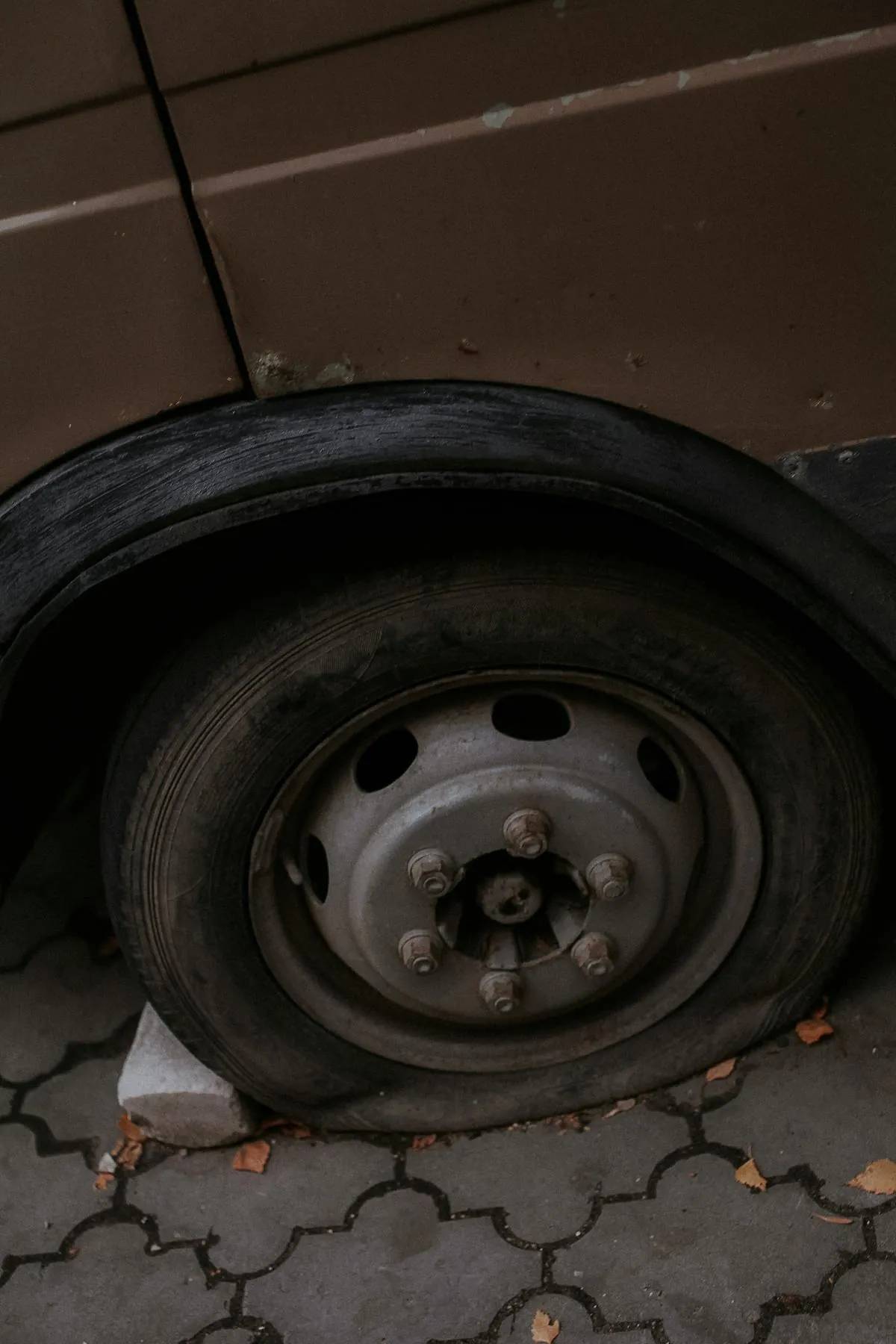
A growing number of new cars come with a tyre repair (sealant) kit instead of a spare wheel. It saves weight and boot space and helps fuel economy, but it only works for small punctures in the tread. For sidewall damage, a blowout or a shredded tyre, a sealant kit won't help at all, which catches a lot of drivers out at the worst moment.
How a tyre repair kit works
You connect a small compressor and pump liquid sealant into the tyre through the valve. The sealant coats the inside and plugs small holes while you drive slowly to the nearest fitter. It's a temporary get-you-going fix, not a repair, and the tyre usually needs replacing or a proper inspection afterwards, so don't think of it as a permanent solution, and TyreSafe warns sealant has clear limits beyond a small tread puncture.
Limitations to know
- No good for holes larger than about 4mm or any sidewall damage.
- Sealant can make a professional puncture repair impossible, forcing a new tyre.
- Kits have an expiry date, so check yours is still in date before you need it.
- Each kit sets its own speed and distance limit once used, usually a low speed for a short distance, so read the label before you set off.
The case for a spare wheel
A full-size or space-saver spare lets you swap the wheel and carry on, whatever the damage. The downside is the space, the weight, and the fact that you need to be willing and able to change a wheel safely at the roadside, which isn't always practical in the dark, the rain or on a busy road. But for a blowout or sidewall damage, where a sealant kit is useless, a spare is the one thing that gets you moving again under your own steam.
Space-saver vs full-size spare
If your car has a spare, it's worth knowing which type. A space-saver is the narrow temporary wheel most cars carry where a spare is fitted at all: it saves space but is limited to around 50mph and short distances, just enough to reach a fitter. A full-size spare is a normal wheel and tyre you can drive on indefinitely, though it may not match the others if it's an older steel wheel. Either way, check the spare's pressure and age occasionally, because a spare that's flat or perished when you need it is no use at all. The spare is the most forgotten tyre on the car.
What does your car actually carry?
Lift the boot floor now, not at the roadside, because plenty of drivers find out what they have when it is dark and raining. Four possibilities exist, and a minute's look in the boot tells you which.
- A spare wheel in the well under the boot floor, or under the rear of the car on some vans and SUVs. Check it is a space-saver or full-size, and read the pressure sticker on it.
- A sealant kit, usually a small bag or box with a compressor and a bottle of sealant, often tucked in a side pocket or foam tray.
- Run-flat tyres and no kit at all. Look for RFT, ROF, SSR or similar on the sidewall, and for a TPMS light, which run-flats depend on. See run-flat tyres explained.
- Nothing, because a previous owner removed the spare or used the kit and never replaced it.
Whatever you find, check the jack, wheel brace and locking wheel nut key are there too. A spare without the key to remove the locking nut is just ballast. Our guide to spare wheel maintenance covers what to keep with it.
Kit, spare or run-flat: how they compare
| Sealant kit | Space-saver | Full-size spare | Run-flat tyres | |
|---|---|---|---|---|
| Handles a small tread puncture | Yes | Yes | Yes | Yes |
| Handles sidewall damage or a blowout | No | Yes | Yes | Usually, at reduced speed |
| Effort at the roadside | Low | Wheel change | Wheel change | None |
| Speed and distance after | Low speed, short distance | Around 50mph, short distance | Normal | Limited, per the maker |
| Boot space and weight | Minimal | Some | Most | None |
| Tyre usually saved afterwards | Often not | Often, if repairable | Often, if repairable | Rarely after running flat |
None of the four is right for everyone. A kit suits town drivers who will call a fitter anyway; a spare suits people who drive long distances at night or in rural areas; run-flats suit drivers who want to keep moving without stopping. What matters is knowing which you have and what it cannot do.
Using a sealant kit, step by step
A sealant kit works when it is used quickly on a small tread puncture with the object still in the tyre. The steps are simple, but the order matters.
- Get the car well off the road on firm ground and put the hazard lights on. Do not use a kit on a motorway; get behind the barrier and call National Highways on 0300 123 5000.
- Leave the nail or screw in place. Pulling it out makes the hole harder for the sealant to plug.
- Connect the sealant bottle to the valve and the compressor to the car's 12V socket, following the order printed on the kit.
- Run the compressor until the tyre reaches the pressure the kit or your handbook specifies.
- Drive straight away for a few miles at low speed so the sealant spreads and seals, then stop and recheck the pressure.
- Head to a fitter or book one, and tell them sealant is in the tyre. It affects how the tyre is handled and whether it can be repaired.
If the tyre will not hold pressure after the sealant, the hole is too big or in the wrong place, and the kit has done what it can. Stop and call for help rather than drive on. Whether sealant is a good idea in the first place is covered in tyre sealant: good or bad.
Changing a wheel safely
A wheel change is straightforward on a flat driveway and genuinely risky on a busy verge, so decide where you are before you decide whether to do it. TyreSafe advice on roadside safety is worth reading once in comfort.
- Never change a wheel on a motorway. Follow the Highway Code motorway rules, get everyone behind the barrier and call National Highways.
- Firm, level ground only. A jack on soft verge or a camber can slip.
- Handbrake on, in gear or Park, and chock the wheel diagonally opposite if you can.
- Loosen the nuts a turn before jacking, while the wheel is still on the ground.
- Jack only at the point marked in the handbook, and never put any part of you under the car.
- Fit the spare, tighten the nuts in a star pattern, lower the car, then tighten fully.
- Have the nut torque checked at a garage soon after, and respect the space-saver's speed limit.
If the locking wheel nut key is missing or rounded, stop there. Forcing it usually makes the job harder, and locking wheel nut removal is a service we offer at the roadside.
The third option: a mobile fitter
If you have neither a usable spare nor a working kit, or would rather not change a wheel at the roadside, we can come to the car once it is parked somewhere safe off the road, repair a tyre where it is safe to do so and replace it where it isn't.
