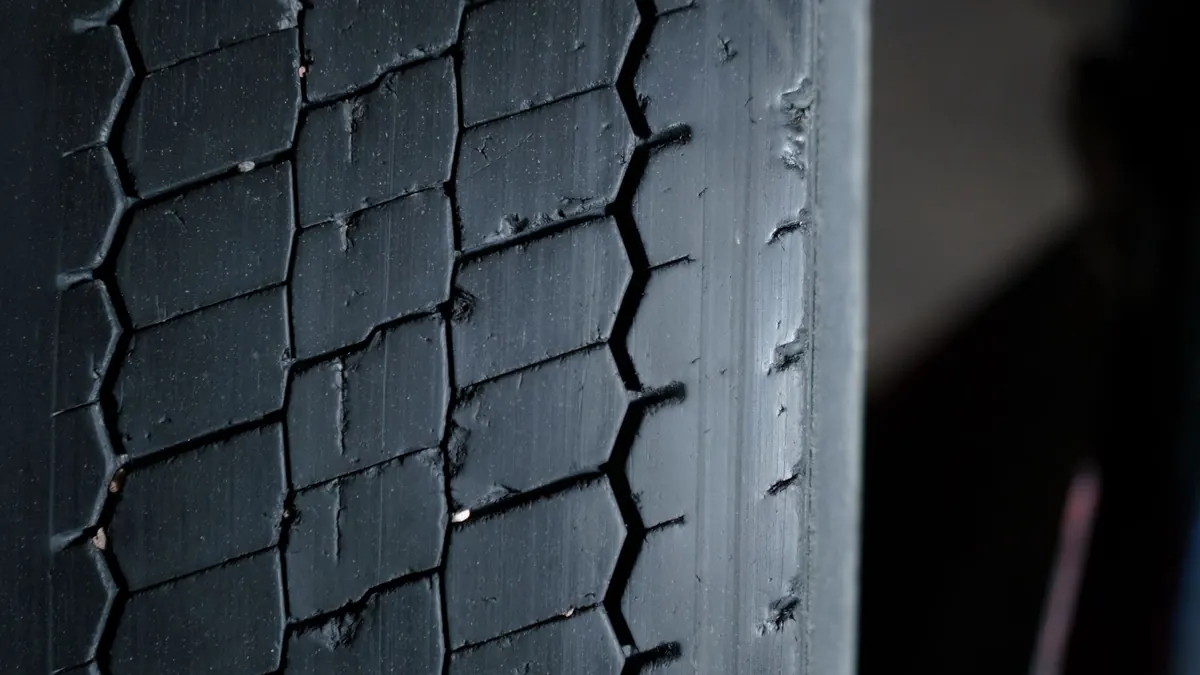
Tyre sealant is fine as an emergency get-you-moving fix, but it's not a repair. For a small puncture in the tread when you have no spare, it can save the day. But it won't help with bigger holes or sidewall damage, it can make a proper repair impossible afterwards, and it has to be cleaned out before any permanent fix. Think of it as a tool to reach help, not a solution.
When sealant helps
There's a clear, narrow set of situations where a sealant kit earns its place in the boot:
- You have no spare wheel and a small tread puncture.
- You need to move a short distance to a safe place or a fitter.
- The kit is still in date, because sealant expires and hardens with age.
In those cases it does exactly what it's designed to: get you from an awkward spot to a safe place without a roadside wheel change.
The downsides
The reasons sealant isn't a proper fix matter as much as the times it helps:
- It can ruin a repair. Sealant coats the inside, and some fitters won't repair a sealant-filled tyre, meaning you need a new one.
- Limited scope. It's no good for holes over about 4mm or any sidewall damage.
- Messy and temporary. The tyre still needs proper inspection and cleaning out.
- Balance issues. Sealant can throw the wheel out of balance until removed.
Sealant vs a proper repair
It helps to be clear about what each one is. Sealant is a temporary measure that coats the inside of the tyre and plugs a small hole well enough to drive slowly to safety. A proper puncture repair removes the tyre from the wheel, inspects the inside, and fits an internal patch-plug to the British Standard, which lasts the life of the tyre. The two aren't interchangeable: sealant buys you a short journey, a repair restores the tyre. Crucially, using sealant can sometimes rule out the proper repair afterwards, so it's a trade-off, not a free option.
A better option for most drivers
If you'd rather not gamble on a sealant kit, a mobile fitter is more reliable and follows the proper repair standard. We come to you, inspect the tyre, and either repair it to the British Standard BS AU 159 or replace it, with no sealant residue and no compromise. For most drivers, knowing a fitter can come out to you removes the main reason to rely on sealant at all. We cover London and the Home Counties from Brent Cross, NW2, and take jobs further out when the diary allows, including evenings, nights, weekends and bank holidays at the same price as a weekday job.
How to use a sealant kit properly
Most sealant failures are down to technique rather than the product, so if you are going to rely on one, know the steps before you need them. The kit in your boot is normally a bottle of sealant and a small 12-volt compressor, with the instructions printed on the bottle or the case.
- Get somewhere safe first. Off the carriageway, hazard lights on, and out of the way of traffic. On a motorway, leave at the next exit or reach a service area only if the car still handles safely; otherwise stop in an emergency area as the Highway Code describes, get everyone out behind the barrier, call 999 or National Highways on 0300 123 5000, and do not use the kit on a motorway.
- Find the puncture. If the object is still in the tread, leave it in; it helps the sealant seal around it. If it is in the sidewall or the hole is bigger than a few millimetres, stop here, the kit will not work.
- Connect the bottle to the valve as the instructions show, then plug the compressor into the 12-volt socket with the engine running.
- Inflate to the placard pressure. The sealant goes in with the air. If the pressure will not come up within the time the instructions give, the hole is too big.
- Drive immediately, slowly, for a couple of miles so the sealant spreads and seals, then stop and check the pressure again and top up if needed.
- Observe the speed and distance limit printed on the kit, commonly around 50mph for a short distance, and head straight for a fitter.
Then replace the used bottle. A kit with an empty or expired bottle is a compressor and nothing more. If you would rather not do any of this at the roadside, our flat tyre help page explains what we do instead.
Sealant and TPMS sensors
If your car has tyre pressure sensors inside the wheels, sealant can be a problem for them. The sensor sits on the back of the valve inside the tyre, and liquid sealant sprayed around the inside of the tyre can coat it, clog the small pressure port, or set hard on it.
The result is a sensor that reads wrongly or not at all, and a warning light that stays on after the tyre is fixed.
Three points to keep it in proportion:
- Manufacturer kits are usually formulated for the job. The bottle that came with the car is normally described as sensor-safe, because the maker knows what is in the wheel. Generic aftermarket cans are more of a gamble.
- Cleaning matters more than the product. When the tyre is dismounted, the fitter should wash the sealant off the sensor and inspect the valve. Tell them sealant has been used so they allow time for it.
- A dead sensor is a replaceable part. Costs vary by car, but it is a known job for a tyre or TPMS specialist.
If the TPMS light stays on after a sealant repair and the pressures are correct, the sensor is the first suspect. And if you are buying an aftermarket kit, look for one that specifically states it is safe for TPMS.
Sealant, spare wheel or run-flat: which is best for you?
There is no single right answer, because each option solves a different part of the puncture problem. The honest comparison looks like this:
| Option | Handles | Does not handle | Best suited to |
|---|---|---|---|
| Sealant kit | Small tread punctures, no wheel change needed | Sidewall damage, large holes, blowouts; may spoil a repair | Cars with no spare well; drivers who want the lightest option |
| Space-saver spare | Any single tyre failure | Speed and distance limits; needs a jack and the strength to change a wheel | Most family cars; longer journeys away from help |
| Full-size spare | Any single tyre failure, no restrictions | Takes boot space and weight; the spare itself ages | 4x4s, estates, towing |
| Run-flat tyres | Driving a limited distance at reduced speed after a puncture | Usually not repairable; firmer ride; fewer choices | Cars designed for them, typically with TPMS |
Whichever you carry, check it occasionally. A space saver flat from years in the boot is as useless as an expired sealant bottle. Our run-flat tyres guide covers that option in more detail. TyreSafe's advice on all of this is at tyresafe.org.
Preventive sealant, and what it does to a repair
A different product is sold to be put into a healthy tyre in advance, on the promise that it seals punctures as they happen. It is popular with cyclists and some van and off-road users, and the instinct is understandable, but for a road car it brings the downsides of emergency sealant without the emergency.
The issues are the same ones a fitter sees with a used kit, only spread across all four tyres:
- Balance. A liquid that sloshes and settles unevenly can cause a vibration, which is exactly what balancing is meant to prevent.
- Repairs. A tyre coated inside has to be cleaned thoroughly before a patch will bond, and some fitters will decline the job because they cannot be sure of the bond. A puncture that would have been a routine repair to BS AU 159 can become a replacement.
- Hidden damage. A sealed puncture you never knew about may have been outside the repairable zone or may have let the tyre run soft for weeks. A puncture that announces itself is, in a sense, safer.
- Corrosion. Some products are unkind to alloy rims and to the valve core over time.
If punctures are a recurring problem, the better fix is usually to work out why: a route past a building site, tyres run soft so they pick up debris, or a valve that leaks.
Used sealant already?
No problem, just tell us when you book so we can plan for cleaning it out and checking the tyre properly. Call or WhatsApp 07473 720871 and we'll sort the tyre out the right way.
