
"Arrived and was very kind and polite. Reassured me about changing the tyres and was quick and attentive straight away."
EBEliza BarclayGoogle review
Not every damaged tyre is finished. We come to the car, look at where the damage is, and tell you honestly whether it can be repaired to BS AU 159 or has to be replaced, then do whichever is right.
Often not, but not always. Kerb scrapes, pothole hits, sidewall cuts and bulges all look alarming, and only some of them mean a new tyre. Here is the quick answer; the table further down has the detail.
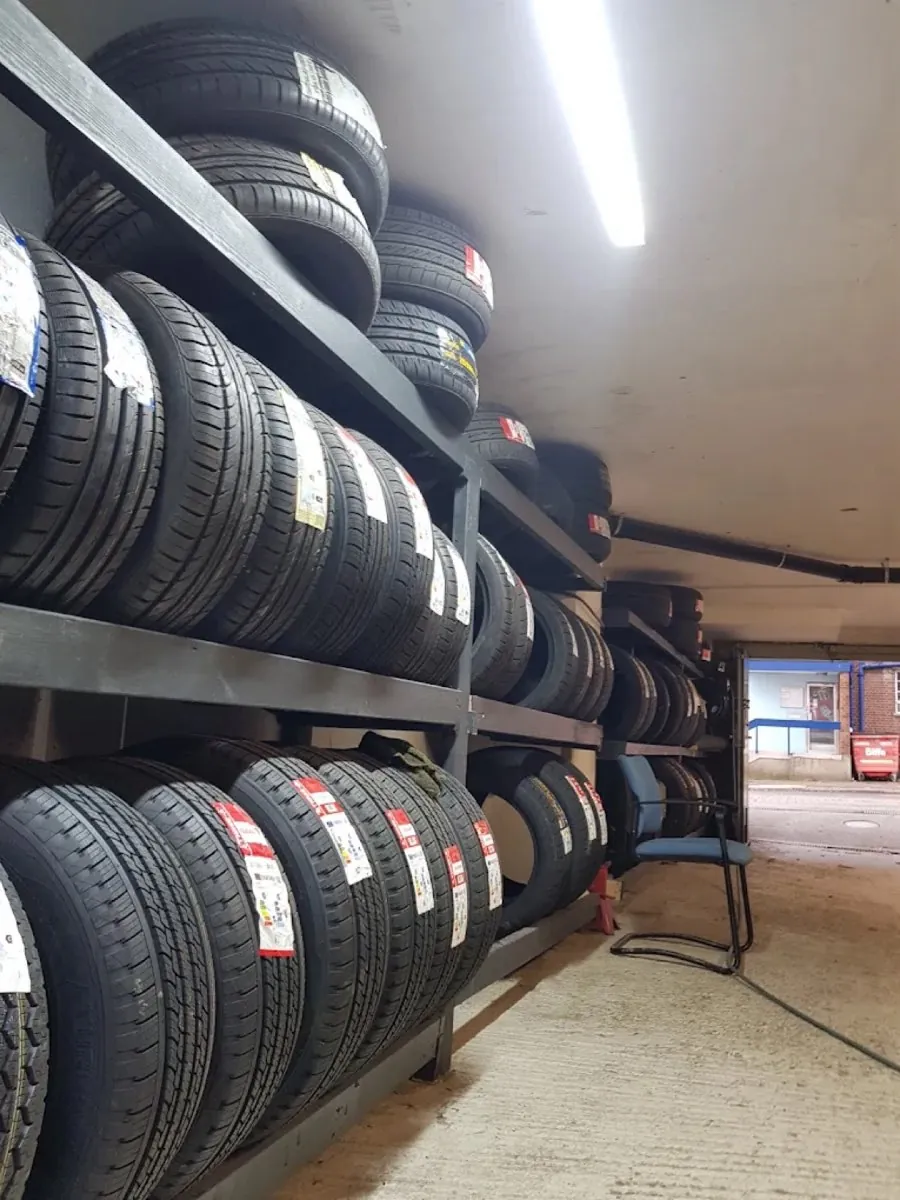
Every tyre repair in the UK should follow BS AU 159, the British Standard that says where a car tyre may be repaired and where it may not. We follow it to the letter, which is why we sometimes say no.
| What we find | Verdict | Why |
|---|---|---|
| A puncture in the central three-quarters of the tread, no wider than 6mm | Repairable | The standard allows a plug-and-patch repair from the inside, once the tyre is off the rim and inspected all round. |
| A puncture in the shoulder or the sidewall | Not repairable | These areas flex with every turn of the wheel. A repair there will not hold, and the standard does not permit one. |
| A hole wider than 6mm, or a long cut in the tread | Not repairable | Too much of the casing is broken for a repair to give back its strength. |
| A bulge or egg on the sidewall | Not repairable | The cords inside have snapped. Only the inner liner is holding the air, and it can let go without warning. |
| A cut or scuff that shows cord or fabric | Not repairable | Once the reinforcement is open to water and grit, the casing is finished. |
| A tyre that has been driven on while flat | Not repairable | The sidewalls and inner liner have been crushed against the rim. The damage is inside, where you cannot see it. |
| A run-flat tyre with a puncture | Not normally | Many run-flat makers do not allow repairs, and a run-flat that has been driven deflated is never repaired. |
| Tread at or below 1.6mm, or cracked and perished rubber | Replace | The tyre has reached the end of its life, whatever caused the damage you noticed. |
| A kerb scuff on the sidewall, rubber only, no cord showing, no bulge | Usually fine to keep | Cosmetic. We check it, note it and tell you what to watch for. |
If in doubt, do not drive on it. A tyre with a cut into the casing, a bulge or exposed cords is illegal to use on the road, and GOV.UK sets out the penalties.
Catching a kerb at parking speed usually scuffs the outer sidewall and does no more than that. What we look for is whether the scuff has gone through the rubber to the cords, whether there is a raised bump anywhere round the tyre, and whether the rim behind it has been bent or chipped. A scrape that stays in the rubber is cosmetic. A scrape that shows cord, or a bulge that appears in the days after the hit, means the casing has been damaged and the tyre needs replacing. Our guide on sidewall damage shows the difference.
A hard pothole strike pinches the tyre between the road and the rim. The tell-tale signs are a bulge on the sidewall, a cut on the inner shoulder you cannot see without turning the wheel, and a wobble or vibration afterwards that points to a buckled wheel. We check all three. If the tyre is finished we replace it; if the rim is bent or cracked we tell you, because a new tyre on a damaged wheel will not hold air. Keep the tyre, photograph the pothole and the damage, and read our guide to making a pothole damage claim against the council or National Highways. Keep the invoice for the work as well, because a claim needs it.
The sidewall is the thinnest part of the tyre and the part that flexes most, so nothing can be repaired there. A cut that shows fabric, or a bulge of any size, is a replacement every time. Bulges are the one to take seriously today rather than next week: the air is being held by the inner liner alone, and it can give way at speed with no warning at all.
If the damage is a nail or screw in the middle of the tread, it is most likely a repair rather than a replacement. That is covered on our puncture repair page, where the same BS AU 159 rules apply.
You do not need to know the answer before you call. Tell us what happened and what you can see, and we do the rest at the car.
We work from one base at Brent Cross, NW2, so the arrival time depends on the distance and is given on the call. Making an enquiry is free, and the price of a repair, and of a replacement if one turns out to be needed, is agreed before any work.
Where this page ends and the others begin. If the tyre has burst or blown out, there is nothing to decide and you want burst tyre replacement. If you already know the tyre is beyond repair and need the right one fitted urgently, see emergency tyre replacement. If the tyre has simply gone flat and you are not sure why, start with flat tyre help.

"Arrived and was very kind and polite. Reassured me about changing the tyres and was quick and attentive straight away."
"Quick, helpful and very understanding of our situation."
"Very quick and efficient service."
Word for word from Google. Read them all on our reviews page or on Google.
The rules behind our verdict: whether a damaged tyre can be repaired is decided by BS AU 159, explained by TyreSafe, which rules out sidewall and shoulder repairs; the legal minimum tread depth is 1.6mm across the central three-quarters (GOV.UK).
We work from one base at Brent Cross, NW2; the areas we cover are listed below. The arrival time is given on the call.
Send a photo on WhatsApp or call. We agree the price of a repair or a replacement before any work, and give you the arrival time on the call.