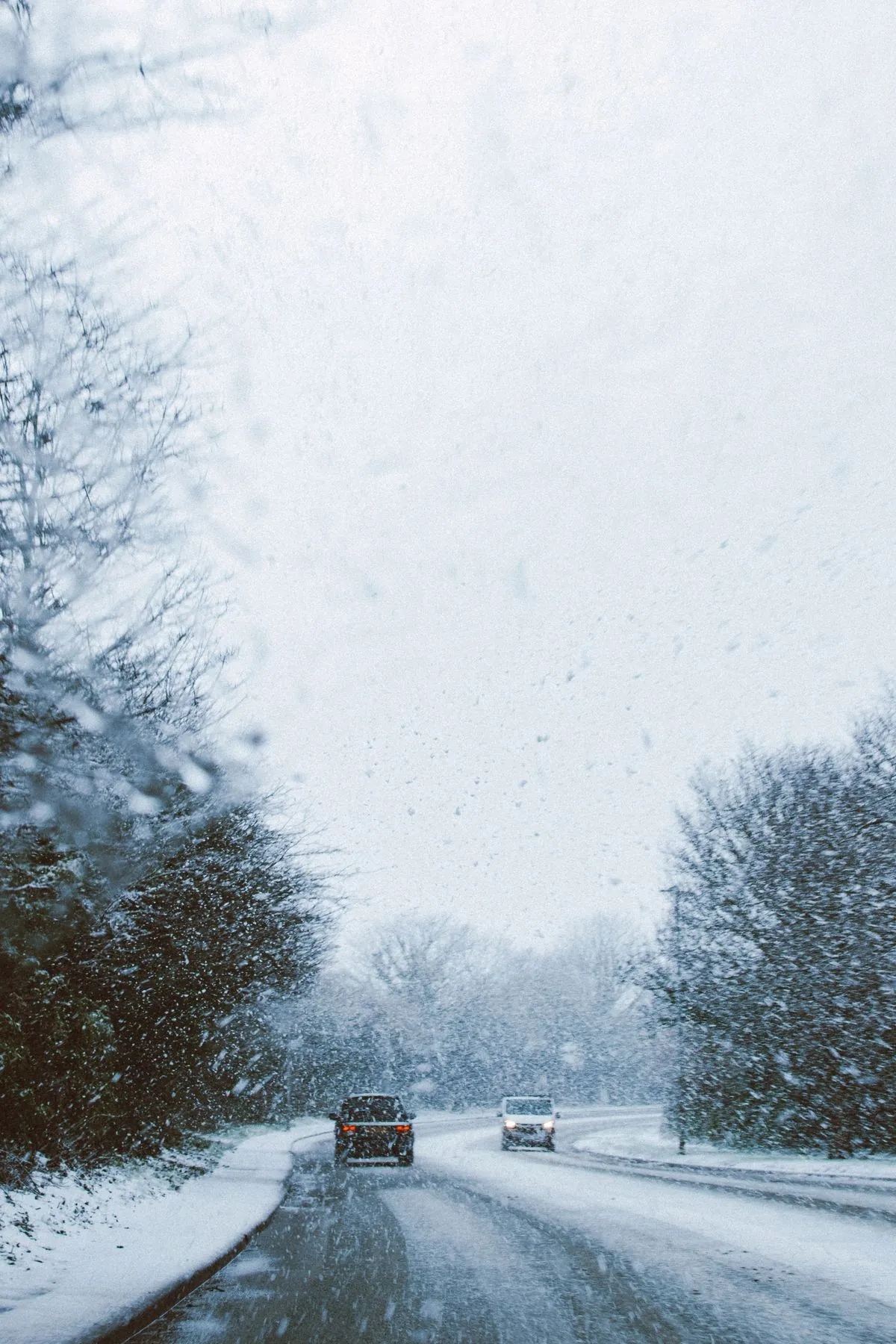
The first proper frost is when a winter's worth of small neglects arrive at once. Pressures have drifted down with the temperature, tread that was adequate in summer is now marginal in the wet, and the locking wheel nut key nobody has looked for since last year is still missing. None of it takes long to sort out beforehand.
Pressure falls as it gets colder
Air contracts as it cools, so the same quantity of air in the tyre exerts less pressure. A tyre set correctly on a mild autumn day will read lower on a cold morning without anything having leaked.
The effect is enough to matter. Combined with the natural gradual loss that all tyres experience, it is why so many TPMS lights appear during the first cold week of the year. That is the system working, not failing. We cover the mechanism in why tyre pressure drops in cold weather.
Check them cold, and properly
Cold means before driving, or at least a couple of hours after. A tyre checked warm reads high, so setting it to the placard figure then leaves it under-inflated once it cools.
Use the vehicle's own figures from the door shut or fuel flap, and remember the loaded figures if the car is carrying people and luggage over the holidays. Do the spare too, since a spare at 15psi is no use at all.
Tread and condition
Wet grip and stopping distance are the properties that degrade as tread wears, and winter is when you need them. Use the 20p test at several points around and across each tyre, not one spot.
While you are down there, look for cracking in the sidewall flex zone and at the base of the tread grooves, which is age rather than wear and is covered in cracked and perished tyres. UK requirements on tread and defects are on GOV.UK.
Cold rubber grips less
Tyre compounds are formulated to work in a temperature range. Summer compounds stiffen as temperatures drop, and a stiffer tyre conforms less well to the road surface, so grip falls even on a dry road.
That is the actual argument for winter and all-season tyres in the UK, rather than snow, which we get comparatively little of. The benefit shows up on cold wet mornings far more often than in a blizzard. See are winter tyres worth it in the UK.
A first-frost checklist
The whole check takes about twenty minutes on a Saturday morning, and everything on it is something that goes wrong on the first icy Monday.
| Check | How | Pass mark |
|---|---|---|
| Pressures, all four and the spare | Cold, with your own gauge, against the placard | Within 1 PSI of the figure for your load |
| Tread depth | 20p test at three points across and three around each tyre | Coin band hidden everywhere; 3mm or more is the aim for winter |
| Sidewall condition | Torch, inner and outer sidewalls | No cracking, cuts or bulges |
| Valve caps | Present on all four | Caps fitted; a missing cap lets water into the valve, which can freeze |
| Locking wheel nut key | Find it, try it on a nut | Key present, fits, not rounded |
| Jack and brace | Present, jack winds freely | Both work; you know where they are |
| Tyre age | DOT date on each sidewall | Under ten years; be more cautious with a spare |
Two of those need explaining. Valve caps matter more in winter because water sitting in an uncapped valve can freeze and stop the core sealing, and a tyre that lost air overnight after a hard frost is sometimes exactly that.
Tyre age matters because cold rubber that is already hardened by age grips worst of all.
Winter, all-season or stay on summer tyres?
For most UK drivers doing modest mileage, a good all-season tyre is the sensible compromise; winter tyres earn their keep for anyone who must drive early on rural roads, in hilly areas or in the north. The first frost is the natural point to decide, because the benefit starts with cold, not snow.
Tyre makers commonly quote around 7°C as the point below which a summer compound starts to give up grip and a winter compound starts to gain it. The UK spends a good part of November to March below that, especially in the mornings, which is when most commuting happens.
- Summer tyres: best above 7°C, and fine for a city driver who can leave the car at home on the rare icy day. They stiffen and lose wet grip in the cold.
- All-season tyres: a softer compound and more sipes than a summer tyre, carrying the three-peak mountain snowflake mark on the better ones. Fit them and forget about swapping.
- Winter tyres: the most grip in cold and snow, but they wear quickly in warm weather, so they need swapping back in spring and somewhere to store the other set.
Whatever you choose, tread depth matters more in winter than in summer. A summer tyre with plenty of tread may well outperform a worn all-season tyre at 2mm on a cold wet road.
Driving on the first icy morning
On ice, the Highway Code says stopping distances can be ten times those on a dry road, and no tyre on sale changes that by much. The first frost of the year is when drivers have forgotten this and the roads have not yet been gritted, so the tyre check above is only half the preparation.
Rules 228 to 231 of the Highway Code cover icy and snowy weather: clear all the glass and lights before setting off, drive slowly in as high a gear as possible, accelerate and brake very gently, and leave a much bigger gap than usual.
Black ice forms first on bridges, in shade and on exposed rural roads, and it looks like wet tarmac.
If the car starts to slide, ease off the accelerator and steer gently in the direction you want to go; do not brake hard. A car with ABS will judder under braking on ice, which is the system working, so keep the pedal pressed rather than pumping it.
Under-inflated tyres and frost are a particularly bad mix, because a soft tyre loads its shoulders, lifts the centre of the tread and responds more slowly to steering, exactly when grip is scarce. Our guide to driving in snow and ice covers the technique in more depth.
The check nobody does until it is too late
Find the locking wheel nut key, and actually try it on a nut. Keys wear, get lost between owners, and live in glovebox compartments people forget about. Discovering it is missing on a dark verge in December is a genuinely miserable way to learn.
The same applies to the wheel brace. Many cars carry a folding brace that is barely adequate on a warm day in a garage, let alone on a frozen verge against nuts a garage over-tightened last summer. Knowing it works is worth more than assuming it does.
Check the jack and brace are present too, and that you know where they are. If the key has gone, we can remove locking wheel nuts without it, as covered in locking wheel nut removal. If a tyre needs replacing, call 07473 720871 and we will come to you.
