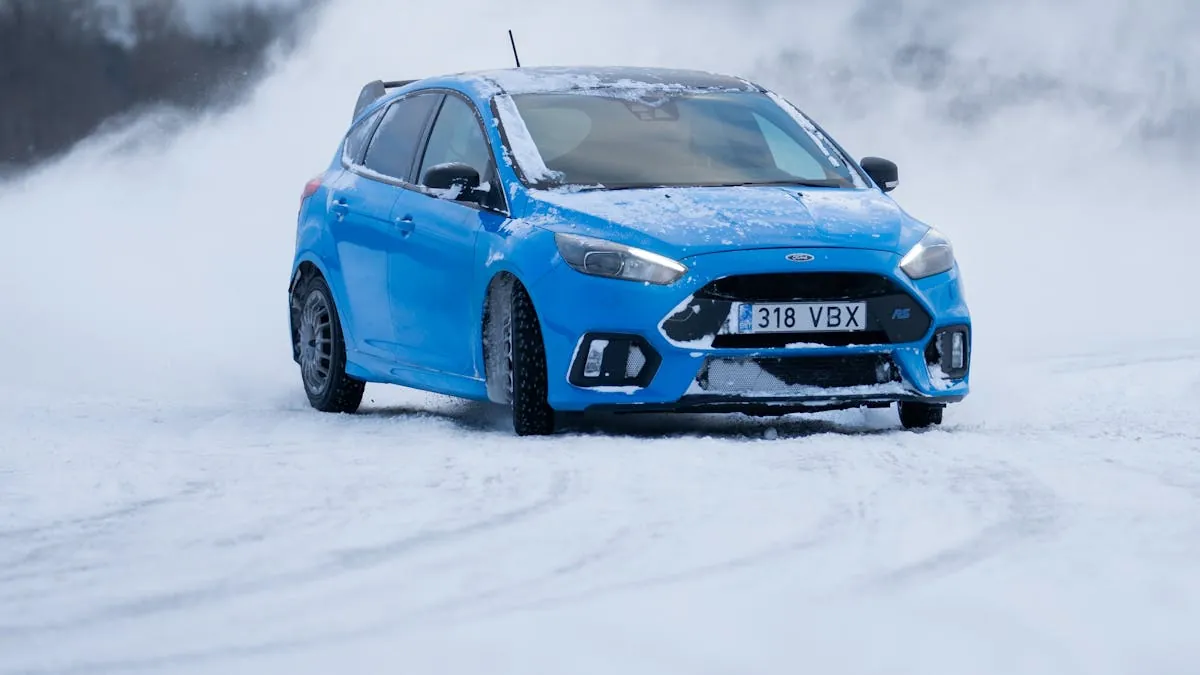
Snow and ice can stretch your stopping distance to as much as ten times the dry figure, so the golden rule is to slow right down and leave a huge gap. Beyond that, it's all about gentle, smooth inputs and the right tyres. Get those three things right, speed, smoothness and tyres, and winter driving becomes far safer.
Slow down and leave room
Grip is scarce on snow and ice, so everything takes longer: accelerating, braking and especially stopping. The Highway Code (rule 230) warns that stopping distances can be ten times greater than on dry roads, so drop your speed well below normal and leave a much bigger gap to the car in front. Most winter incidents come from carrying too much speed for the grip available.
Gentle inputs win
Sudden moves break traction, so smoothness is everything. The Highway Code (rule 231) advises driving at a slow speed in as high a gear as possible and accelerating and braking very gently:
- Pull away gently in a higher gear (second) to reduce wheelspin.
- Brake early and softly; let the car slow gradually rather than stamping on the pedal.
- Steer smoothly and avoid sharp inputs that can start a skid.
- Going downhill, use a low gear and stay off the brakes as much as you can.
The right tyres matter most
No driving technique makes up for tyres that can't grip. Good tread is essential (the legal minimum is 1.6mm, see the 20p test), and below about 7°C, winter tyres or all-season tyres grip far better than summer tyres because their compound stays flexible in the cold. For anyone who regularly drives in snow, that's the single biggest safety upgrade.
Before you set off
Clear all the snow off the car, not just a porthole in the windscreen, check your tyre pressures (which drop in the cold), and make sure your tread is healthy. Carry a scraper, de-icer and warm layers, and only travel if you really need to when conditions are bad.
How to correct a skid on snow or ice
Ease off everything, look where you want to go, and make small corrections rather than big ones. Most skids on snow end badly because the driver adds more steering or more brake when the car has already run out of grip. Which correction you need depends on which end has let go.
- Front slides on (understeer). The car goes straight on despite your steering. Lift off the accelerator, do not add more lock, and wait for the front tyres to bite. Unwinding the steering slightly often helps them grip again.
- Rear slides out (oversteer). The back of the car steps sideways. Steer gently in the direction the rear is sliding, ease off the accelerator, and straighten the wheel as soon as the car comes back into line so you do not swing the other way.
- Braking and the ABS kicks in. Keep firm, steady pressure on the pedal. The pulsing you feel is the system working. Do not pump the brakes, and keep steering, because ABS lets you steer while braking.
- Stability control light flashing. Leave the system switched on. It is cutting power or braking individual wheels to keep you straight, and it works better than most drivers can.
In an automatic, use the winter or snow mode if the car has one, or select second gear manually to pull away. The aim in every case is the same: give the tyres less to do at once, because on ice they can either steer or brake, and rarely both.
Hills, junctions and black ice
Keep momentum going uphill, choose a low gear before going downhill, and treat bridges and shaded bends as ice until proven otherwise. These are the places where winter driving goes wrong even for people who are otherwise driving sensibly.
Uphill: leave a big gap so you are not forced to stop halfway, then hold a steady speed in the highest gear that will pull. If the car ahead stalls on the hill, waiting at the bottom is better than stopping on the slope.
Downhill: select a low gear before the descent, not on it, and let the engine hold the speed. Brake gently and early if you need to, keeping the wheels turning. Locked wheels on ice do not steer.
Junctions and roundabouts: start slowing far earlier than usual, because the polished, compacted snow at a give-way line is often the slipperiest surface on the road. Approach roundabouts slowly enough that you do not need to brake on the circle itself.
Black ice: it forms first on bridges, flyovers, shaded stretches and under trees, where the road surface is colder than the air. The clues are a sudden lightness in the steering and road noise going quiet. Side roads and estate roads are usually not gritted, and salt becomes far less effective in a very hard frost, so a gritted main road can be fine while the turn into your street is not. The Highway Code's adverse weather rules cover both ice and snow in detail.
Winter tyres, snow socks and chains in the UK
There is no legal requirement to fit winter tyres in the UK, but a winter or all-season tyre with the three-peak snowflake symbol is the single biggest improvement you can make. Socks and chains are for getting out of trouble rather than everyday use.
| Option | Best for | Limits |
|---|---|---|
| Summer tyres | Above about 7°C | Compound stiffens in the cold; poor on snow and ice |
| All-season (3PMSF) | Most UK drivers, year round | Not as strong as a true winter tyre in deep snow |
| Winter tyres | Regular snow, hills, rural roads | Needs a second set and somewhere to store them |
| Snow socks | Getting off an unploughed road or driveway | Temporary; remove on cleared tarmac or they wear through fast |
| Snow chains | Deep, compacted snow | Only on snow-covered roads; check the wheel-arch clearance first |
The three-peak snowflake symbol is the marking that matters; a plain M+S stamp is not a tested standard.
Tread depth matters more in snow than in any other condition. Winter tyres lose a large share of their snow performance well before the 1.6mm legal minimum, which is why the GOV.UK tyre guidance treats 1.6mm as the floor rather than a target. If your tread is nearer 3mm than 5mm, plan to replace before the cold rather than after it.
If you get stuck or break down in snow
If the wheels spin, stop spinning them: straighten the steering, clear the snow from in front of the tyres and try again gently in second gear. Spinning the wheels polishes the snow into ice and digs the car in deeper.
- Straighten the front wheels so the tyres are not pushing sideways.
- Clear packed snow from in front of and behind all four tyres with a shovel or scraper.
- Put mats, grit, cat litter or sand under the driven wheels for bite.
- Use the gentlest possible throttle in second gear (or the car's snow mode). If the traction control keeps cutting the power to nothing, the handbook may advise switching it off briefly for this one job.
- Rock the car gently between forward and reverse to build a little momentum.
If the car will not move or a tyre has failed, stay with the vehicle unless shelter is very close. Keep the exhaust pipe clear of snow if you run the engine for warmth, and run it in short bursts rather than continuously. Keep warm layers, a torch and a charged phone within reach. A packed winter emergency kit makes this far less unpleasant.
On a motorway or dual carriageway, the usual breakdown rules apply regardless of the weather: get behind the barrier, well away from the traffic, and call for help. For a flat or damaged tyre elsewhere, our mobile fitters can come to you once you are somewhere safe to stop, evenings and weekends included when the diary allows.
We fit winter tyres
We fit winter and all-season tyres at your home or work from our base at Brent Cross, NW2, so you're ready before the cold sets in.
