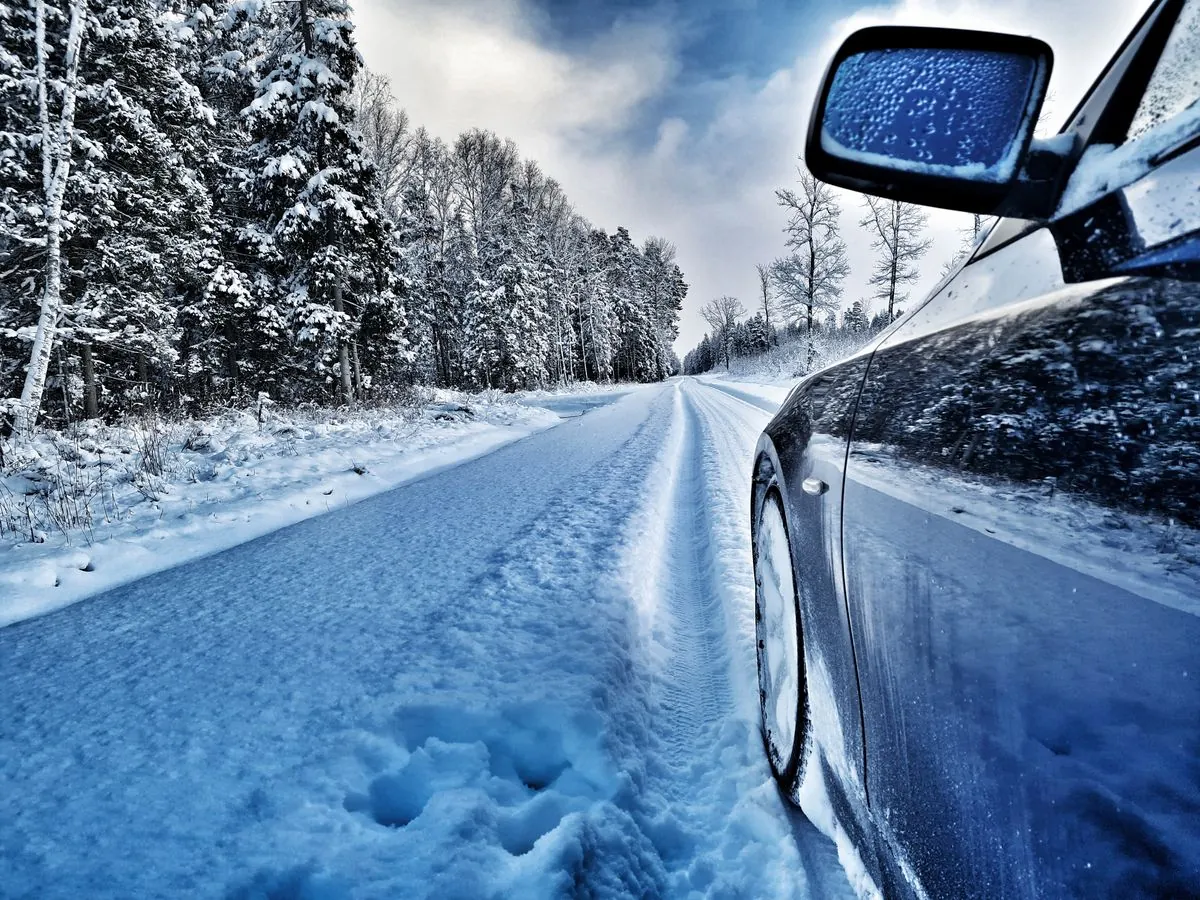
Winter is when tyre weaknesses turn into incidents. Cold, wet, dark roads stretch braking distances and expose worn or under-inflated tyres. A few checks before the cold sets in keep you safe and help you avoid a roadside emergency on the worst possible night. Here's the checklist.
1. Check your tread, generously
The legal limit is 1.6mm, but for winter you want more, because grip and water clearance fall steadily as tread wears. Many safety groups and tyre makers suggest around 3mm as a practical winter minimum. If you're near it, replace before winter rather than during it, when the roads are at their most demanding and a low tyre matters most.
2. Set your cold pressures
Pressure drops in the cold, roughly 1 PSI for every 5 to 6°C fall in temperature. Check and set them to the recommended figure on a cold morning, then recheck as the season goes on and temperatures swing. Don't be tempted to over-inflate to "keep ahead" of the drop, as that reduces grip on cold, slippery roads.
3. Inspect for damage and age
Look for cracks, bulges and embedded objects all the way round each tyre, and check the DOT date. Cold weather is especially hard on perished or ageing rubber, which loses flexibility just when you need grip most. A tyre that's been fine all summer can struggle once the temperature drops if it's already old or damaged.
4. Winter, all-season or stay put
If you face real cold and snow, or live somewhere hilly, consider dedicated winter tyres. For milder areas, all-season tyres are a fuss-free compromise that saves the seasonal swap while still beating summer tyres in the cold. If your current summer tyres have plenty of tread and you rarely see ice, staying put with a careful winter check may be fine, the right call depends on where and how you drive.
5. Pack a winter kit
Even with perfect tyres, it's worth being ready for the worst. Keep these in the car through winter:
- A working spare or repair kit and a torch.
- A phone charger and our number saved for callouts.
- Warm layers and a blanket in case you have to wait at the roadside.
- A scraper and de-icer so you can clear the car properly before setting off.
When to do the winter check
October is the month to do it: after the summer heat has gone, before the clocks change and before the first frost. Waiting for the first icy morning means doing the check in the dark, in the cold, when tyre fitters are at their busiest.
Three dates are worth putting in the diary:
- Early October: the full check in this guide, and the decision on winter or all-season tyres. If you are swapping sets, book it now; demand peaks in the first cold week.
- The first frost: recheck pressures, because the overnight drop in temperature will have pulled every tyre down a few PSI. This is also when the TPMS light most often appears.
- January: a mid-winter look at tread and sidewalls. Salt, grit and potholes do their damage over Christmas, and a tyre that was fine in October may not be by the new year.
If you run a dedicated winter set, the spring change back is just as important. The soft winter compound wears quickly once the roads warm up, so book the swap when daytime temperatures are consistently above about 7°C, usually late March or April in most of the UK.
The set you take off needs storing properly to be any good next year: clean, dry, and away from sunlight and heat.
The winter tyre checklist
Here is the whole check on one table. It takes about ten minutes with a pressure gauge, a 20p coin and a torch.
| Check | What to look for | Action |
|---|---|---|
| Tread depth | 20p test in three places across each tyre; aim for 3mm or more | Replace anything near 2mm before winter |
| Cold pressures | All four against the figure on the label in the door frame or fuel flap, cold, plus the spare | Set to spec; recheck after the first frost |
| Sidewalls | Cracks, bulges, kerb scuffs, inside face as well as outside | Bulge or deep cut: replace |
| Age | Four-digit DOT code; rubber over about six years old hardens in the cold | Old and cracking: replace |
| Valves | Caps present, stems not cracked or perished | Fit caps; replace perished stems |
| Wheel rims | Corrosion at the bead on alloys, which causes slow leaks in the cold | Clean and seal when a tyre is next off |
| Spare or kit | Spare inflated and in date; sealant kit within its expiry | Replace out-of-date sealant |
| Wheel nut key | Locking wheel nut key present and undamaged | Find it now, not at the roadside |
The locking wheel nut key is the one people forget. A missing or worn key turns a ten-minute wheel change into a wait for a specialist, see locking wheel nut removal. And if you run run-flat tyres, remember that they are not a spare: they get you somewhere safe, then need replacing.
TPMS warnings on cold mornings
If your tyre pressure warning light comes on the first cold morning of the year, the tyres are almost certainly fine; the cold has simply pulled the pressure below the sensor's threshold. It is a common winter tyre question and the easiest to fix.
Air contracts as it cools, so a tyre set to 33 PSI in a mild September afternoon can read 29 or 30 on a frosty morning. Most systems warn when a tyre drops a set percentage below its stored value, which is exactly what has happened.
- Check all four tyres with a gauge, cold. If they are all a few PSI down and none is dramatically lower than the others, it is the weather.
- Inflate to the figure on the label in the door frame or fuel flap. Do not add extra to "beat" the next cold night.
- Reset the system if your car needs it. Some relearn automatically after a few miles; others have a button or a menu option. The handbook tells you which.
The light matters when one tyre is noticeably lower than the rest, or when it comes back on within a day or two of being reset. That is a slow puncture, not the cold, and it needs looking at before it becomes a flat on a dark evening.
Our full guide to the TPMS warning light covers the different system types and what a flashing light, as opposed to a steady one, is telling you.
Salt, grit and your wheels
Road salt is one reason alloy wheels can start leaking air in January. Salt water gets between the tyre bead and the rim, corrosion lifts the alloy surface, and the seal that held air perfectly all summer starts to weep. The tyre is fine; the wheel is the problem.
You can limit it. Rinse the wheels, including the inside faces, when you wash the car, and do it more often in a salty spell. A coat of wheel sealant or wax before winter helps.
If a tyre keeps going down a few PSI a week with no nail in it, ask the fitter to check the bead seat when the tyre is next off; cleaning and sealing the rim usually cures it; a leaking valve is the other thing to check.
Grit does a different kind of damage. Loose chippings and the sharper edges of fresh potholes cut sidewalls and shoulders, and winter is when potholes multiply as water freezes in the cracks.
Slow down for them, do not swerve, and if you hit one hard enough to feel it, check the tyre and the rim for a bulge or a flat spot within the next day or two.
Corroded or kerbed alloys also throw the balance out, which you feel as a vibration through the wheel at motorway speed. If a new vibration appears mid-winter, wheel balancing is the first place to look.
Get winter-ready at your door
We'll check your tyres and fit winter or all-season sets at your home or work from our base at Brent Cross, NW2 (London and the Home Counties are closest), so you're ready before the first cold snap rather than scrambling after it. Call 07473 720871 or book online.
