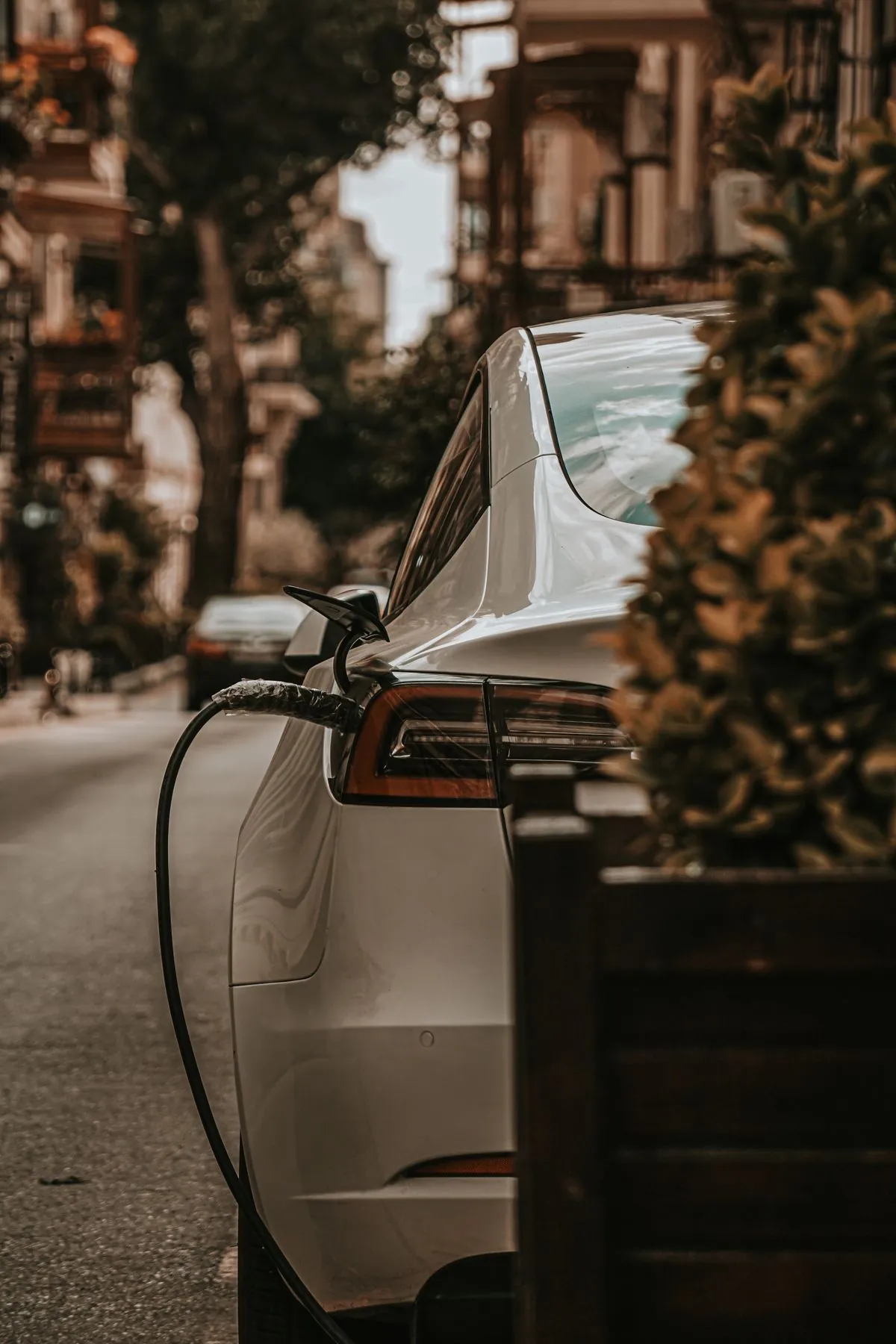
Electric cars are tougher on tyres than petrol or diesel cars. They carry a heavy battery pack and put down instant torque, so the tread wears faster, and many EVs leave the showroom on tyres built specifically for the job. The question most owners ask is simple: do you really need special tyres for an electric car? Often the answer is yes, or at least tyres that match the EV's higher load rating and rolling-resistance needs. This guide covers everything from why they wear quicker to whether the EV-specific premium is worth paying.
Why EVs wear tyres faster
EV tyres wear faster for two main reasons: weight and torque. A battery pack can add several hundred kilograms over an equivalent petrol model, so there is more load pressing on each tyre's contact patch. Electric motors also deliver peak pull the instant you touch the accelerator, which scrubs rubber off far quicker than a gradual petrol pull-away.
- Weight. Battery packs make EVs significantly heavier, increasing the load every tyre carries and the heat it builds up over a journey.
- Instant torque. Strong acceleration from a standstill drags the tread across the road and accelerates wear, especially on the driven axle.
- Regenerative braking. Slowing through the motor puts braking load through the driven tyres, so that axle wears faster.
EV tyres can reach the legal limit sooner than the petrol equivalent because of the extra weight and instant torque, which is why staying on top of correct pressures and regular rotation matters even more. Tyre-safety charity TyreSafe stresses that under-inflation speeds up wear and hits efficiency, and on a heavy EV that effect is amplified.
How much faster do they wear?
There's no single figure, because it depends heavily on the car, the tyre and how you drive. But the pattern is consistent: an electric car driven enthusiastically can get noticeably fewer miles from a set than a comparable petrol car driven the same way. The good news is that this is largely within your control. Driving style is the biggest lever. Because the torque is instant and effortless, it's easy to accelerate harder than you would in a combustion car without realising it, and that's exactly what wears tyres. Smooth inputs, using the regenerative braking to slow gently, and keeping pressures spot-on can close most of the gap to a petrol car.
What makes an EV tyre different
An EV-specific tyre is engineered around the three things electric cars demand most: load capacity, range and quietness. Compared with a standard tyre, it typically uses a reinforced casing, a low-rolling-resistance compound and sound-deadening foam, all tuned for a heavier, near-silent car.
| EV tyre feature | Why it matters |
|---|---|
| Higher load rating (often XL/reinforced) | Carries the extra battery weight safely |
| Low rolling resistance | Protects driving range between charges |
| Noise-reducing foam | Cuts the road roar an electric drivetrain no longer masks |
| Tougher tread compound | Resists the wear caused by torque and weight |
How EV tyres affect range
Rolling resistance is the big one for range, and it's where the wrong tyre quietly costs you. The grade is printed on the EU tyre label every tyre carries, and the Energy Saving Trust notes that lower-resistance tyres use less energy to keep moving, which on an EV translates straight into extra miles per charge. Fit a cheap, high-resistance tyre to an EV and you can lose range on every single journey, which over the life of the tyre can outweigh any saving on the purchase price. The tyre's weight and tread pattern matter too, so an EV-optimised tyre isn't just marketing, it's protecting the headline figure you bought the car for.
Do you need the OE-marked tyre?
Many EVs are sold on tyres carrying a manufacturer's "original equipment" (OE) marking, a small code on the sidewall showing the tyre was developed with that carmaker. These are tuned specifically for the car's weight, range target and refinement. You don't always have to fit the exact OE tyre again, but matching it is the safest route, because it guarantees the load rating, rolling resistance and noise characteristics the car was designed around. If you'd rather not pay for the OE tyre, the key is to choose a quality alternative that at least matches the size, load and speed ratings, and ideally one tested well for EV use. Send us the registration and we'll confirm what your car was designed for.
Can you fit normal tyres to an EV?
You can fit standard tyres to many EVs, but only if they match or exceed the car's required load and speed ratings, and you should expect to trade away some range and gain some road noise. The minimum figures you must not drop below are printed in the handbook and on the door-pillar placard. The heavier the car, the less forgiving it is of the wrong spec, so a borderline load rating that would be fine on a small petrol hatch can be unsafe on a two-tonne EV.
Getting the most from EV tyres
The habits that make any tyre last apply doubly to an EV:
- Check pressures monthly. A heavy EV punishes under-inflation faster, costing both tread and range.
- Ease off the throttle. Smooth acceleration is the single biggest thing you control.
- Rotate regularly. Spreading wear across all four tyres matters more when the driven axle wears quickly.
- Replace in matched sets where the handbook calls for it, particularly on all-wheel-drive EVs where mismatched grip can confuse the traction systems.
- Mind the alignment after any kerb or pothole, as a heavy car wears a misaligned tyre fast.
Are EV tyres worth the extra?
EV-specific tyres usually cost a little more, and EVs often run larger wheels, so the bill can be higher than for a comparable petrol car. Is it worth it? For most owners, yes. The right tyre protects your range (which is real money in charging and resale), copes properly with the weight, and keeps the cabin quiet the way the carmaker intended. A cheaper, unsuitable tyre can claw back its saving in lost range and faster wear, and may not have the load capacity a heavy EV needs. The sensible approach is the same as any tyre purchase, just with range added to the equation: think in cost per mile and total value, not the sticker alone.
EV tyres fitted at your door
We source and fit the correct EV-rated tyres at your home or workplace from our base at Brent Cross, NW2, so you never have to drive a heavy car on a worn or wrong-spec tyre to reach a garage. Tell us your registration and we'll confirm the right tyre, load rating and label grades before we arrive.
