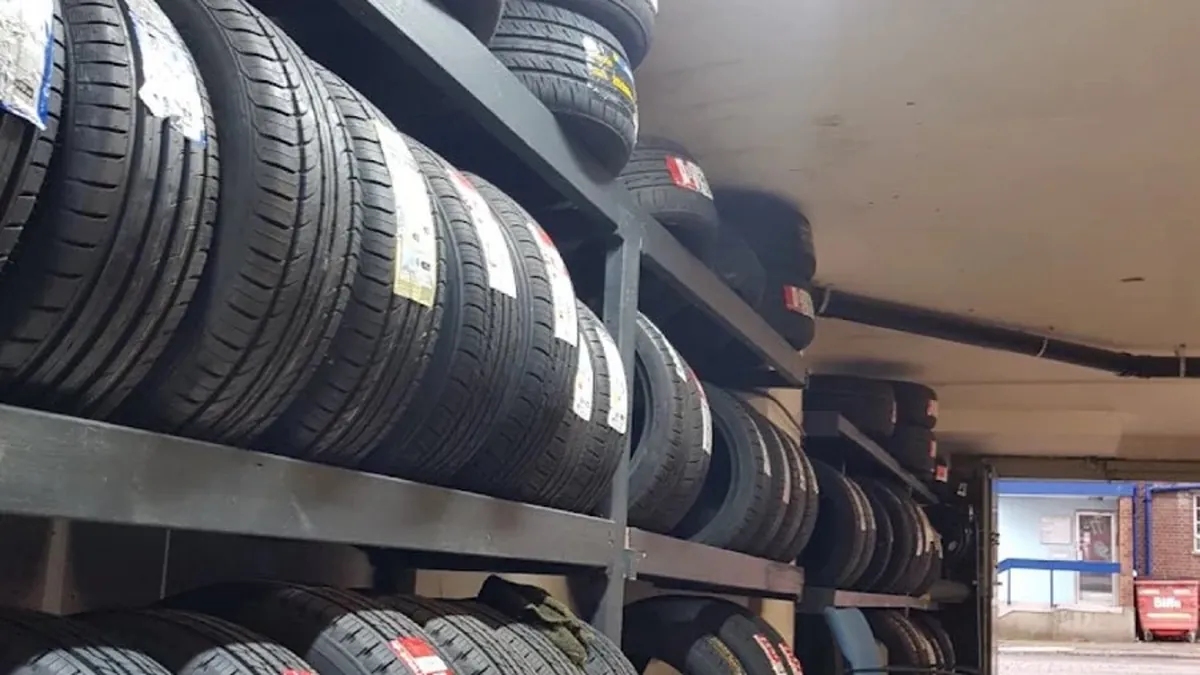
Every new tyre sold comes with a standardised label grading fuel efficiency, wet grip and noise. It's a quick, like-for-like way to compare tyres regardless of brand, much like the energy label on a fridge. For most drivers, wet grip is the rating that matters most, because it's a direct safety measure rather than a comfort or cost one.
The label has been a legal requirement on new tyres sold in the UK and EU for years, so you'll see it on every option a fitter offers. Tyres sold in Great Britain carry the UK version of the label, which grades fuel efficiency and wet grip from A to G and shows noise in decibels with sound-wave bars; the newer EU version, with A to E grades, a noise class from A to C and snow and ice icons, is used in the EU and Northern Ireland, and you may see either. Here's what each rating means, how to weigh them up, and the important things the label leaves out.
The three ratings
The label boils a tyre's performance down to three headline measures, each tested to a common standard so the grades are comparable across brands.
- Fuel efficiency (A to G on the GB label, A to E on the newer EU label). Measures rolling resistance; lower resistance means better economy. An A-rated tyre uses noticeably less fuel than an E over its life.
- Wet grip (A to G on the GB label, A to E on the newer EU label). Measures wet braking performance. The difference between an A and an E can be several car lengths in an emergency stop.
- External noise. Shown in decibels, with one to three sound-wave bars on the GB label or a class from A to C on the newer EU label; fewer bars, or a class nearer A, means a quieter tyre.
How to prioritise the ratings
Put wet grip first. It's the rating most tied to safety, especially given the UK climate, see our guide to wet-weather tyre safety. Then weigh fuel efficiency for running costs, particularly if you do high mileage, and finally noise for comfort on long motorway trips.
For an EV, fuel efficiency (rolling resistance) carries extra weight because it directly affects your range. For most other cars, a tyre graded A or B for wet grip is the priority, with fuel efficiency as the tie-breaker.
What the label doesn't tell you
The label is useful but partial. It doesn't capture dry handling, aquaplaning resistance, tread life, or how a tyre behaves at the limit, all of which matter. Two tyres can carry the same grades yet perform very differently in independent tests. Pair the label with independent test reviews for the full picture before you buy, rather than treating the grades as the whole story.
Newer label symbols
Updated labels can also include icons for snow grip (the three-peak mountain symbol, 3PMSF) and ice grip. These are useful if you're weighing up winter or all-season tyres, where cold-weather performance is the whole point. Many newer labels also carry a QR code linking to the tyre's full database entry, so you can check the official figures yourself.
A worked example: choosing between three tyres
Rule out anything with a poor wet-grip grade first, then let fuel efficiency and noise decide between what is left. Suppose a fitter offers you three tyres in your size. This is how the label settles it in a couple of minutes.
| Tyre | Wet grip | Fuel | Noise | Read it as |
|---|---|---|---|---|
| Budget option | C | C | 72 dB | Legal and usable, but the longest wet stop and the loudest. Fine for a low-mileage car driven gently. |
| Mid-range option | A | B | 69 dB | The best wet braking here, good economy and quiet. The one to buy for most drivers. |
| Eco option | B | A | 70 dB | Best economy, a step behind in the wet. Worth it for an EV or a high-mileage driver. |
Notice that the label does not tell you the price, the brand or the tread life, so the mid-range tyre may or may not be the most expensive. Notice also that a grade can differ between sizes of the same tyre, so check the label for your exact size rather than the range name.
If you are torn between the last two, our guide to fuel-efficient tyres covers when the economy grade is worth a step in wet grip and when it is not.
Two label formats, and what the noise figure means
You may see two versions of the label, and they grade the same tests. The older style, which is the version GB law sets out, shows external noise as a decibel figure with one to three sound-wave bars, fewer bars being quieter.
The newer EU style shows the decibel figure with a letter class from A to C beside a speaker icon, and adds the snow and ice symbols described above. Some newer labels also carry a QR code that links to the tyre's official database entry.
The decibel figure is the noise the tyre makes passing by on the outside, measured to a set test, not the noise you hear in the cabin. The two are related but not the same: a tyre that is quiet on the label can still hum on a particular car or road surface.
The decibel scale is logarithmic, so a difference of three decibels is a large change in sound energy even though it looks small on paper.
If cabin noise is what bothers you, treat the label as a starting point. Humming that appears on a tyre you have had for a while is usually uneven wear or a wheel bearing rather than the tyre's design.
Does the label favour premium brands?
No. The grades come from standard tests, and a well-made budget tyre can score as well as a premium one on the label. That is the label's real value: it lets you compare a brand you have never heard of with one you have on the same scale.
It is common to find a mid-range tyre with an A for wet grip and a famous name with a B in the same size.
What the label cannot show is the rest of the picture, and this is where the premium brands usually earn their price: dry handling, aquaplaning resistance, behaviour at the limit, consistency across the tyre's life and tread mileage. Independent tests cover those.
Our guide to budget vs premium tyres goes through what the label misses.
A sensible approach for most drivers is to set a floor, such as B or better for wet grip, and then let price, reviews and availability decide among the tyres that clear it. A tyre with an E for wet grip is a poor buy at any price for UK roads.
Which tyres carry a label, and which do not
New car, van and light-truck tyres must carry the label; part-worn tyres do not, and a few special types are exempt. Sellers should show you the grades before you buy, on the tyre itself or alongside the listing when you buy online, and a fitter offering you options should be able to quote them.
- Car and van tyres: labelled. Van tyres are graded to the same three measures.
- Winter and all-season tyres: labelled, and this is where the snow symbol matters most; see the three-peak snowflake symbol.
- Part-worn tyres: no label, because they are second-hand. You are buying blind on all three measures.
- Temporary spares, retreads and professional off-road tyres: generally exempt.
The label sits alongside, not instead of, the legal basics. Whatever the grades, a tyre still has to be the right size, load and speed rating for the car and to meet the UK rules on tread and condition once it is on the road. A grade A tyre worn below 1.6mm is illegal like any other.
Use the label, then let us fit
Pick the ratings that matter to you and we'll source a matching tyre and fit it at your home or work from our base at Brent Cross, NW2, and we can tell you the label grades for each option on the call. Read how our mobile tyre fitting works.
