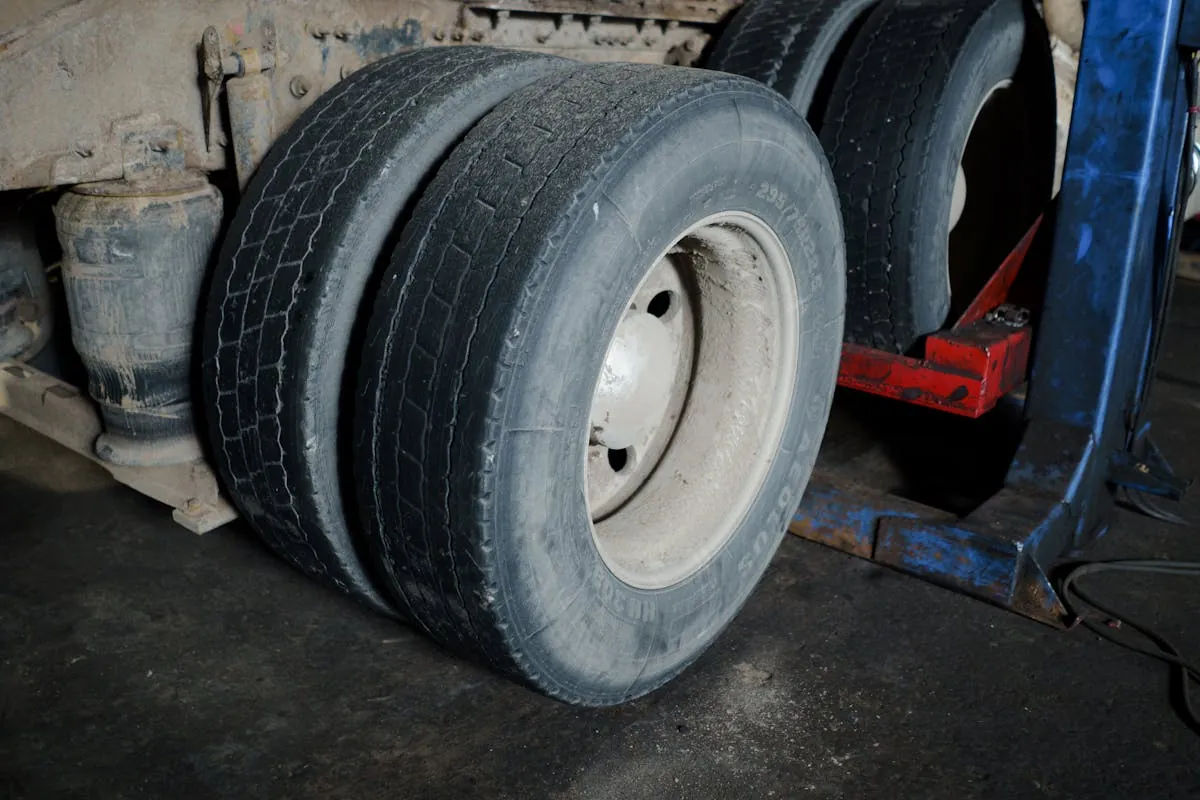
A tyre's load index is a code for the maximum load, in kilograms, that a single tyre can carry, and its speed rating is a letter for the maximum speed at which it can carry that load. Those are Michelin's definitions (Michelin). On the sidewall they sit together straight after the size, as a number and a letter such as 91V or 95H, and together they're sometimes called the service description.
Fitting a tyre rated below what your car needs removes a safety margin the car was designed with. This guide gives you the full load index chart from 60 to 120 in kilograms, the speed rating chart from L to (Y) in km/h and mph, and what XL, HL, ZR and a lower winter rating mean for you.
What is a tyre load index?
The load index is a number that stands for the maximum weight one tyre can support when it's properly inflated. Continental defines it as "a numerical code representing the maximum weight a tyre can support when properly inflated" (Continental). The number itself isn't a weight; you look it up. For example, 91 means 615kg per tyre and 95 means 690kg.
Two things to remember:
- It's per tyre. A car on four 91-rated tyres has 615kg of capacity at each wheel, and the car maker specifies an index with each axle's maximum weight in mind.
- It assumes correct pressure. An under-inflated tyre can't carry what its index says. Your car's figure is on the door sill or in the handbook.
Continental is clear on replacements: "you should never install tyres with a lower load index than what the vehicle manufacturer specifies." A higher index is fine.
Tyre load index chart: 60 to 120 in kg
Find the number after the tyre size in the table to get the maximum load per tyre in kilograms. The values below were checked against the load index tables published by Continental (60 to 74) and Michelin (70 to 120).
| Load index | kg per tyre | Load index | kg per tyre | Load index | kg per tyre |
|---|---|---|---|---|---|
| 60 | 250 | 81 | 462 | 102 | 850 |
| 61 | 257 | 82 | 475 | 103 | 875 |
| 62 | 265 | 83 | 487 | 104 | 900 |
| 63 | 272 | 84 | 500 | 105 | 925 |
| 64 | 280 | 85 | 515 | 106 | 950 |
| 65 | 290 | 86 | 530 | 107 | 975 |
| 66 | 300 | 87 | 545 | 108 | 1,000 |
| 67 | 307 | 88 | 560 | 109 | 1,030 |
| 68 | 315 | 89 | 580 | 110 | 1,060 |
| 69 | 325 | 90 | 600 | 111 | 1,090 |
| 70 | 335 | 91 | 615 | 112 | 1,120 |
| 71 | 345 | 92 | 630 | 113 | 1,150 |
| 72 | 355 | 93 | 650 | 114 | 1,180 |
| 73 | 365 | 94 | 670 | 115 | 1,215 |
| 74 | 375 | 95 | 690 | 116 | 1,250 |
| 75 | 387 | 96 | 710 | 117 | 1,285 |
| 76 | 400 | 97 | 730 | 118 | 1,320 |
| 77 | 412 | 98 | 750 | 119 | 1,360 |
| 78 | 425 | 99 | 775 | 120 | 1,400 |
| 79 | 437 | 100 | 800 | ||
| 80 | 450 | 101 | 825 |
Some van and 4x4 tyres use indices above 120. Whatever the number, the sidewall of your current tyre and the handbook are the references for your vehicle.
What is a tyre speed rating?
The speed rating is a letter for the maximum speed a tyre can sustain while carrying its rated load. Continental describes it as "a standardised code that indicates the maximum speed a tyre can safely sustain over time under the load and inflation conditions" (Continental). It reflects how the tyre copes with heat and stress at speed. It isn't a recommendation to drive that fast, and UK speed limits apply whatever the rating.
The letters mostly run alphabetically, with one exception that confuses people: H sits between U and V, not between G and J. So an H-rated tyre (210km/h) is rated for a higher speed than a T-rated tyre (190km/h), and a V-rated tyre (240km/h) higher than an H.
Tyre speed rating chart: L to (Y)
Each letter stands for a maximum speed, from L at 120km/h (75mph) to Y at 300km/h (186mph), with (Y) for tyres rated above 300km/h. The km/h figures are the defined values and were checked against Continental, Michelin and the AA tables; the mph figures are rounded as Continental publishes them.
| Speed rating | Maximum speed (km/h) | Maximum speed (mph) |
|---|---|---|
| L | 120 | 75 |
| M | 130 | 81 |
| N | 140 | 87 |
| P | 150 | 93 |
| Q | 160 | 99 |
| R | 170 | 106 |
| S | 180 | 112 |
| T | 190 | 118 |
| U | 200 | 124 |
| H | 210 | 130 |
| V | 240 | 149 |
| W | 270 | 168 |
| Y | 300 | 186 |
| (Y) | Above 300 | Above 186 |
You may see small differences in the mph column between sources, for example Q shown as 99mph by some and 100mph by others. That's rounding from the km/h figure, not a different standard.
What ZR, (W) and (Y) mean
ZR in the size means the tyre is rated for speeds above 240km/h (149mph). Both Michelin and Continental describe ZR this way (Michelin, Continental). It appears inside the size, as in 245/40 ZR18, and modern tyres usually add a service description such as 97Y to show the exact rating.
- W and Y are defined ratings of 270km/h and 300km/h.
- (W), with the letter in brackets, is used for tyres rated above 270km/h, according to Continental.
- (Y) means above 300km/h. Michelin lists it as "ZR (Y)", and Continental says tyres capable of more than the standard Y rating need special testing by the maker.
If your car came on ZR, W or Y-rated tyres, replace like for like or higher. See how to read a tyre size for where each part of the code sits.
XL, Reinforced and HL tyres
XL means extra load: a reinforced tyre that can carry more weight than a standard tyre of the same size. Michelin describes XL tyres as reinforced and capable of heavier loads than standard tyres of identical dimensions (Michelin). "Reinforced" on a sidewall means the same thing.
HL means high load, a newer standard for heavier cars, especially EVs and larger hybrids. Michelin says HL tyres, "despite being the same size and inflated to the same pressure, offer the higher load capacity" these cars need, and are marked with "HL" ahead of the size (Michelin). Continental gives an example for the same 245/40 R19 size (Continental):
| Load version | Load index | Maximum load per tyre |
|---|---|---|
| Standard load (SL) | 94 | 670kg |
| Extra load (XL) | 98 | 750kg |
| High load (HL) | 101 | 825kg |
If your car came on XL or HL tyres, fit the same again. A standard tyre in the same size may not have the load capacity the car needs. EV tyres explained covers why electric cars need them.
Can you fit a higher or lower rating?
A higher load index or speed rating is fine. A lower one isn't, except that winter and all-season tyres may carry a lower speed rating.
- Higher ratings. Michelin says it's "perfectly possible to replace them with tyres with a higher speed index", summing it up as "who can do more can do less".
- Lower load index. Don't. Continental says never to fit a lower load index than the vehicle maker specifies, and replacement tyres "should have the same size, load index, and speed rating specification as specified by the vehicle or tyre manufacturer" (Continental).
- Lower speed rating on summer tyres. Don't. The AA warns it "could cause steering and control issues or you might even suffer tyre failure", and that it "might invalidate your car insurance" (AA). The RAC also says it could affect your insurance (RAC).
- Winter and all-season tyres. Continental says "it is permissible to fit a lower speed rated tyre if moving to an AllSeason or Winter tyre", and notes that some countries require the maximum speed to be displayed to the driver. Michelin applies this to tyres with the three-peak mountain snowflake (3PMSF) marking. Never exceed the tyre's rating, and check your handbook. See are winter tyres worth it in the UK?
On the MOT, the inspection manual's specific load rating and speed rating checks are listed for class 5 and 7 vehicles (MOT inspection manual, section 5). That doesn't make an under-rated tyre acceptable on a car: the safety and insurance risks are the same.
How to find the ratings your car needs
The load index and speed rating your car needs are in the handbook, and usually match the tyres the car came with. Look in three places:
- The sidewall of your current tyres. Read the number and letter after the size, for example 225/45 R18 95H. Continental's markings guide uses this example: 95 is the load code and H the speed rating (Continental).
- The handbook, which lists every approved size with its minimum load index and speed rating.
- The tyre placard on the door sill or fuel flap, which on many cars shows sizes as well as pressures.
If the current tyres don't match the handbook, perhaps because a previous owner fitted something different, the handbook is the reference. If the wheels themselves have been changed, a fitter can confirm which size and rating are correct for the car.
Vans, EVs and towing
Heavier vehicles and heavier loads push the required load index up, and three cases catch people out.
Vans. A commercial tyre is marked with a C after the size and often carries two load indices, such as 104/102 R. The first is the load per tyre when fitted singly, the second the lower load per tyre when two are fitted side by side on a twin-wheel axle. From the chart, 104 is 900kg and 102 is 850kg. Our van tyres guide has more.
Electric cars. The weight of the battery is why so many EVs specify XL or HL tyres. Match the marking on the original tyre exactly.
Towing. A caravan or trailer adds weight on the tow car's rear axle, so use the car's full-load tyre pressure and make sure the rear tyres meet the specified load index. The caravan's own tyres need checking against its handbook too.
Get the right rating fitted where you are
We fit tyres that meet the size, load index and speed rating your car needs, including run-flat, 4x4 and SUV, van, EV and performance tyres. Rescue Tyres is a mobile service from one base at Brent Cross, NW2, covering London and the Home Counties, and further out in the Midlands when the diary allows, fitting budget, mid-range and premium tyres at your home, workplace or a safe place off the road. Tell us the size and the load and speed code from your current tyre, or send a photo of the sidewall, and we'll source the right tyre.
The price is confirmed on the call before any work, and new tyres carry the manufacturer's warranty. We also cover evenings, nights, weekends and bank holidays when the diary allows, at the same price as a weekday job. Call or WhatsApp 07473 720871, see mobile tyre fitting, or use the Book button below.
Sources
- Michelin, Tyre load rating and speed rating
- Michelin, High load capacity tyres
- Continental, Load index
- Continental, Speed index
- Continental, Tyre markings
- Continental, Tyre size
- Continental, New load index code for tyres (HL)
- The AA, Tyre speed ratings
- RAC, Tyre speed rating
- GOV.UK, MOT inspection manual, section 5
