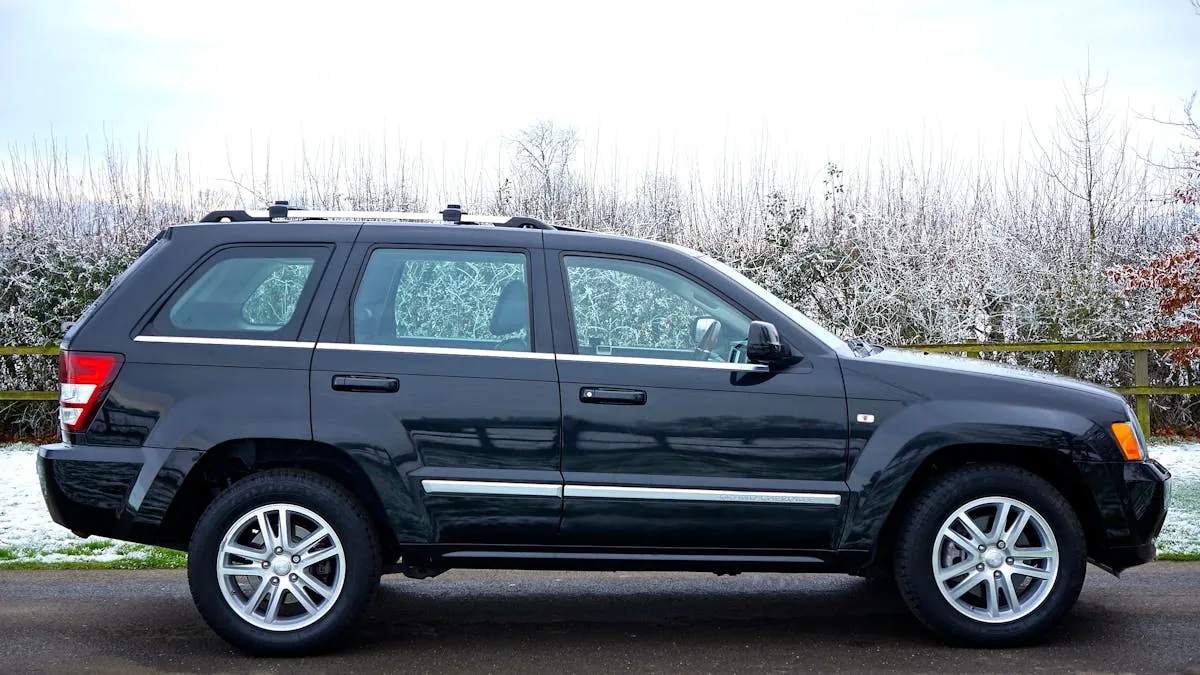
A car that pulls to one side on a flat, straight road usually has a tyre or alignment issue. Start with the cheap, simple checks, pressures and an obviously worn or low tyre, then look at wheel alignment, which is the most common cause, especially after hitting a pothole or kerb. Sorting it protects your tyres as well as your steering.
Check the simple things first
Before assuming the worst, rule out the easy causes:
- Tyre pressures: a low tyre on one side can pull the car. Set them correctly, see tyre pressure.
- An uneven or damaged tyre: a worn or different tyre on one side can cause a pull.
- A slow puncture: a tyre quietly losing air, see slow puncture.
Alignment: the most likely cause
If pressures and tyres are fine and the car still pulls, wheel alignment is the usual culprit. The angles the wheels sit at (camber and toe) have shifted, commonly after a pothole or kerb knock, so the car no longer tracks straight. The RAC notes, in its guide to steering problems, that misalignment causes a car to pull or drift to one side and wears the tyres unevenly, rather than shaking the wheel. It's worth fixing promptly, both to correct the pull and to protect your tread.
Road camber vs a real pull
One thing to rule out: roads are often built to drain to the left, so a slight drift towards the kerb can be normal camber rather than a fault. Test on a flat, straight, level stretch with your hands light on the wheel. If the car pulls firmly and consistently to one side on level ground, that's a real pull worth investigating, not just camber.
Brakes and other causes
If the car only pulls when you brake, the cause is usually the brakes, a sticking caliper, rather than the tyres or alignment. A pull that comes with vibration may involve a balance or wheel problem too. Worn suspension components can also let the alignment drift over time. A car that pulls after a recent pothole strike may also have a buckled wheel, which usually adds a vibration to the pull.
How to test for a pull safely
A proper test takes five minutes on a quiet, flat, straight road and tells you whether the pull is real, which way it goes, and whether it is a tyre. Do it in dry conditions with no traffic close behind.
- Set all four tyre pressures cold to the figure on the door-shut label first. A pull caused by a low tyre disappears at this step.
- On a level, straight stretch at a steady 30 to 40mph, relax your grip and let the wheel sit lightly in your hands. Do not let go. Note whether the car drifts, and how quickly.
- Normal road camber drifts the car towards the nearside kerb, which is the left in the UK, whichever way you drive. If it drifts left on a cambered road but tracks straight on a flat, uncambered surface such as an empty car park, it is camber. A pull to the right, or a pull on flat ground, is the car.
- Brake firmly from the same speed with a light grip. A pull that only appears under braking is a brake fault, not tyres or alignment.
- Check whether the steering wheel sits straight when the car is tracking straight. An off-centre wheel with no pull is an alignment issue too, usually the toe.
The final check is the tyre swap. If the front tyres are the same size and not directional, swap them side to side. If the pull moves to the other side, one of those tyres is the cause, a fault fitters call radial pull or conicity.
If the pull stays the same, the tyres are cleared and alignment is the next suspect. Directional or asymmetric tyres complicate this, so ask a fitter to do it if you are unsure.
Causes of a pull compared
Where and when the car pulls narrows the cause down quickly. Use this table alongside the road test above.
| Cause | When it pulls | Other clues | Fix |
|---|---|---|---|
| Low pressure on one side | All the time | Tyre looks softer, pull goes when corrected | Inflate, then find the leak |
| Tyre conicity or uneven wear | All the time | Pull swaps sides when front tyres are swapped | Replace the tyre |
| Alignment (toe, camber or caster) | All the time, often after a pothole | Off-centre steering wheel, edge wear on one tyre | Four-wheel alignment |
| Sticking brake caliper | Under braking, sometimes constantly if seized | Hot wheel, burning smell, poor fuel economy | Brake repair |
| Worn suspension or bush | Gradually worsening | Knocks over bumps, alignment will not hold | Replace the worn part, then align |
| Road camber | Only on cambered roads | Drift is towards the kerb and disappears on flat ground | Nothing, it is normal |
A pull combined with a shake through the wheel usually adds a balance or wheel problem to the list.
What an alignment check involves
A modern alignment check measures the angles of all four wheels against the manufacturer's figures and prints them before and after adjustment. Ask for that printout; it is the proof the work was needed and done.
Three angles matter. Toe is whether the wheels point slightly inwards or outwards when viewed from above, and it most often scrubs the tread edge and sets the steering wheel off-centre. Camber is the tilt of the wheel from vertical when viewed from the front. Caster is the angle of the steering pivot, which affects straight-line stability.
A difference in camber or caster between the two front wheels is a classic cause of a constant pull.
Two-wheel "tracking" only adjusts the front toe. Four-wheel alignment measures the rears as well, which matters because a rear axle that is not square to the car will make it crab and pull however perfect the fronts are. Have it done after fitting new tyres, after any pothole or kerb strike hard enough to feel, and roughly once a year.
If a pothole was the cause, photograph it.
Pulling after new tyres or a puncture repair
A car that starts pulling straight after tyre work usually has a mismatch across the front axle, not a fault with the work itself. A new tyre with 8mm of tread next to a partly worn one with 3mm has a different rolling circumference and stiffness, and the car can drift towards the more worn side.
Mixing brands or patterns across an axle has the same effect, which is why we recommend replacing in pairs and, at minimum, keeping both tyres on an axle the same make and pattern.
Check the obvious things too: that both new tyres were set to the same pressure, that a directional tyre has not been fitted rotating the wrong way, and that a space-saver spare is not still on the car.
A space-saver is narrower than the tyre it replaces, so a pull is normal while it is fitted, along with the speed limit printed on it. Get the proper tyre back on as soon as you can.
After a puncture repair the tyre should be re-balanced and the pressure reset. If a pull appears anyway, the impact that caused the puncture may also have knocked the alignment out, so get that checked rather than blaming the repair.
We can help
We can check pressures, inspect your tyres for uneven wear and replace any that are causing a pull, at your home or work from our base at Brent Cross, NW2 (further out, call and we will tell you whether we can take the job), and advise if you need an alignment, which is a workshop job we do not offer.
