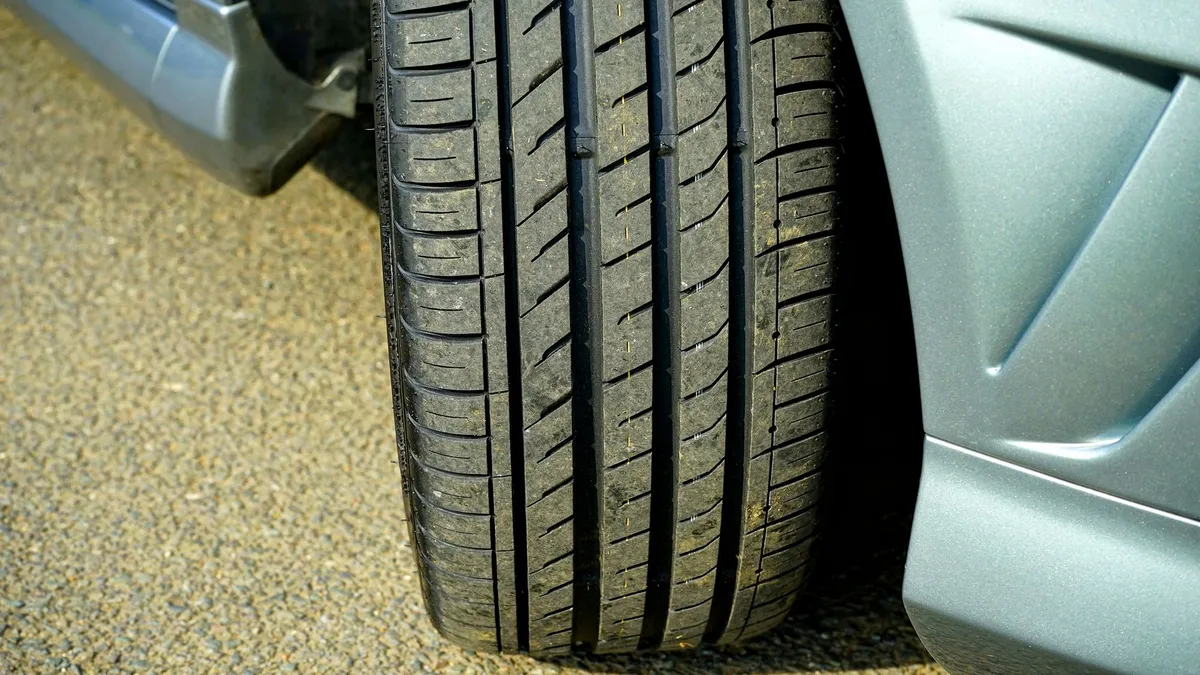
A proper tyre fitting is a small safety check, not just swapping one tyre for another. A good fitter inspects the wheel, fits a fresh valve, balances the tyre, sets the right pressure, torques the wheels correctly, and resets the TPMS, and will flag anything else they spot. Knowing what should happen helps you tell a thorough job from a rushed one.
It's more than a swap
Anyone can lever a tyre on. The difference with a quality fitting is the checks around it, the things that make the tyre safe and long-lasting. A rushed job that skips balancing or correct torque can leave you with vibration, uneven wear or a loose wheel, which is why what the fitter checks matters as much as the tyre itself. The whole job on one wheel usually takes a competent fitter around 15 to 20 minutes, and most of that time is the checks, not the tyre change.
The wheel and valve
With the tyre off, the fitter can see the wheel properly: any buckle, crack or corrosion where the tyre seals, which can cause a slow leak or vibration. A fresh valve goes in as standard, because the rubber perishes with age, and on a TPMS car the sensor is checked and handled carefully.
Balancing, pressure and torque
The new tyre is balanced so it doesn't vibrate, inflated to the manufacturer's pressure, and the wheel is torqued to the correct setting with a calibrated wrench, not nipped up by feel. These three steps are what make a fitting safe and proper, and skipping any of them is a red flag.
A look at your other tyres
A good fitter also glances at your other tyres while they're there, checking tread and looking for the uneven wear patterns that point to alignment or pressure problems. It's a chance to catch an issue early, before it scraps another tyre or leaves you with an MOT surprise, since the MOT fails any tyre below 1.6mm of tread across the central three-quarters and around the whole circumference, or with cuts, lumps or exposed cords (GOV.UK).
The fitting, step by step
A proper fitting follows the same sequence every time, and each step exists to catch a specific problem. If you watch a mobile fitter work, this is roughly what you should see on each wheel.
| Step | What the fitter does | Why it matters |
|---|---|---|
| 1. Confirm the tyre | Checks size, load index and speed rating against the placard or handbook | The wrong spec is illegal and can fail under load |
| 2. Lift the car | Uses the manufacturer's jacking points on level ground | Protects the sills and keeps the car stable |
| 3. Remove and inspect | Takes the wheel off, deflates the old tyre and breaks the bead | Exposes the rim and the inside of the tyre |
| 4. Wheel and valve | Cleans the bead seat, fits a new rubber valve or a new core and seal on a TPMS sensor | Corroded seats and old valves both cause slow leaks |
| 5. Mount | Lubricates the beads and fits the tyre with the rotation arrow or "outside" marking the right way | A tyre fitted backwards is unsafe in the wet |
| 6. Seat and inflate | Inflates until both beads pop onto the rim, then sets pressure | An unseated bead leaks and can slip |
| 7. Balance | Spins the wheel on a balancer and adds weights | Stops vibration and uneven wear |
| 8. Refit and torque | Tightens the nuts in a star pattern with a torque wrench | Prevents a loose wheel or warped brake disc |
| 9. Final checks | Sets all four pressures, resets the TPMS, takes the old tyre away | Leaves the car ready to drive |
If a fitter skips the inspection in step 4, or fits the tyre and drives off without balancing, you are not getting the job you paid for.
Why the torque setting matters
Wheel nuts must be tightened to the figure the car maker specifies, and only a torque wrench can do that reliably. Most cars sit somewhere in the range of roughly 90 to 140 Nm, but the exact figure is in the handbook and varies by model, so a good fitter looks it up rather than guessing.
An air gun run on full does two kinds of damage. Over-tightening stretches the studs or bolts, can warp a brake disc as it clamps unevenly, and makes the wheel almost impossible to remove with the car's own wrench when you get a flat later. Under-tightening is worse: the nuts work loose over the first few miles and the wheel can come off.
Tightening in a star pattern, opposite nuts in turn, pulls the wheel onto the hub evenly. Many manufacturers advise re-checking the torque after a short distance, and a mobile fitter should tell you so. If you carry your own wrench, it is worth checking the nuts are not seized the next time the car is on a drive.
What a fitter should tell you afterwards
A good fitting ends with a short, honest report, not just a receipt. Because the fitter has had the wheel off and looked at the others, they are in the best position to tell you what is coming next.
- Tread on the other three tyres, ideally as a figure in millimetres, so you can plan the next replacement rather than get caught out.
- Tyre age. The four-digit DOT date on the sidewall shows the week and year of manufacture; a tyre that is cracking or perished is worth knowing about even if the tread is fine.
- Uneven wear and what it points to, such as inner-edge wear from camber or feathering from toe misalignment.
- The pressures now set and the torque figure used.
- Anything else spotted while the wheel was off: a weeping shock absorber, a split CV boot, a corroded brake line.
None of this should turn into a hard sell. It is information you can act on when it suits you, and it is one of the reasons a proper fitting is worth more than a swap.
Questions to ask your fitter
Five questions tell you quickly whether you are dealing with a thorough fitter. You do not need to know the answers in advance; you just need to hear confident, specific ones.
- Which tyre are you fitting, and does it match my load and speed rating? The answer should include the size and rating, not just a brand.
- Are you fitting a new valve? On a plain rubber valve, yes, every time. On a TPMS sensor, the service kit (core, seal, nut) should be renewed.
- Will you balance it? Always yes. A mobile van carries a balancer; there is no reason to skip it.
- What torque are you setting the wheel to? A figure, from the handbook or the fitter's data, is the right answer.
- What happens to the old tyre? It should be taken away and disposed of through a licensed waste carrier, see how tyres are recycled in the UK.
If you are still choosing who to use, our guide to choosing a trustworthy tyre fitter goes further.
Booking a mobile fitting with us
We fit tyres at your home or work in London and the Home Counties, and further out in the Midlands when the diary allows, from our one base at Brent Cross, NW2. We give you the arrival time when you call. Ask about any of these checks when you book and we will tell you what the job includes. Book a fit.
