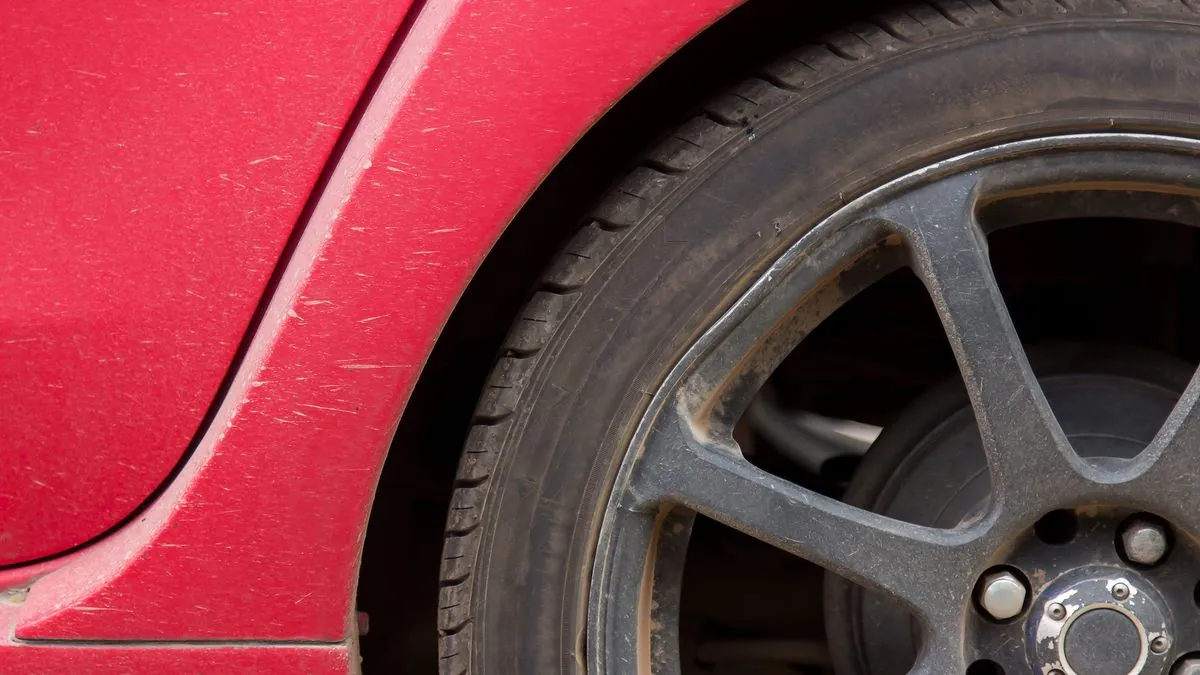
A flat tyre on the school run is stressful, but the safest response is simple: don't drive on it, and don't try to change a wheel in the road with children and traffic around. Park somewhere safe, get everyone onto the pavement, and call a mobile fitter to come to you. It's far safer than a roadside wheel change at a busy time of day.
First, make everyone safe
Pull over somewhere safe and level, off the carriageway if you can, and put your hazards on. Get the children out onto the pavement, away from traffic, rather than leaving them in a car parked half in the road. With everyone safe, you can sort the tyre calmly instead of under pressure in the morning rush. If the school is a short walk away, it is often easiest to walk the children in first and deal with the car afterwards.
Why not to change it yourself
Changing a wheel at the kerbside in busy school-run traffic, often in the dark or rain, with kids to mind, is exactly the situation to avoid. Many newer cars don't even carry a spare wheel. And driving on the flat to "just get there" wrecks the tyre and risks the wheel, see driving on a flat. A mobile fitter removes all of that.
The mobile fitter option
A mobile fitter comes to wherever you've stopped, or to home or the school car park if the school allows it, and repairs or replaces the tyre on the spot, see mobile fitting. You can get the children to school or back home while it's sorted, rather than waiting at a garage. It's the option that fits around a parent's morning.
Preventing the next one
A quick monthly pressure and tyre check, including a look for slow leaks and embedded nails, catches most problems before they strand you. TyreSafe recommends the same monthly A.C.T. routine, Air pressure, Condition and Tread, checked when the tyres are cold, plus a glance that the tread is above the legal 1.6mm minimum. A slow puncture can lose air for days before the tyre looks flat, so a regular look pays off.
Where it is safe to stop
The best place to stop with a flat on the school run is a quiet side street, a car park, or a lay-by, not the school gate. The Highway Code says you must not stop on the yellow zig-zag school entrance markings where signs prohibit it, and should not park near a school entrance at all, see the waiting and parking rules on GOV.UK. A flat tyre is not an exception, and blocking the gate creates exactly the crush of children and cars you are trying to avoid.
In order of preference:
- A car park: supermarket, church hall, leisure centre or the school's own staff car park if they will allow it. Level, off the road, room for a van.
- A residential side street with a proper parking bay or a wide kerb, away from junctions and crossings.
- A lay-by, if nothing better is close.
Avoid stopping on a bend, on a hill crest, opposite a junction, or half on the pavement where the car forces pushchairs into the road. If the tyre has gone down while you are parked at home, you have the easiest case of all: leave it where it is and book a fitter to come to the driveway.
How far can you move the car on a flat?
Only as far as the nearest safe place to stop, at walking pace, and ideally no more than a few car lengths. Every rotation of a fully flat tyre grinds the sidewall between the rim and the road, and once the inner sidewall is chafed the tyre cannot be repaired even if the original puncture was a simple nail in the tread.
The distinction that matters:
- A slow puncture with some air still in it can usually be crept off the road and, if you have a pump, topped up enough to reach home or a car park a mile or two away. Check it again when you stop.
- A completely flat tyre should not be driven on at all beyond getting out of danger. A short drive to school and back is enough to write it off and can damage the wheel rim too.
- A sealant kit will get you moving in some cases, but sealant makes the tyre harder to repair properly afterwards and does nothing for sidewall damage.
If you do have a space-saver spare and somewhere safe and level to fit it, remember it is a temporary tyre with its own speed limit, usually 50mph, printed on the wheel.
Keeping children safe while you wait
Children are safest well back from the kerb, on the far side of a fence or wall if there is one, with an adult between them and the traffic. A parked car with hazards on is not a safe place to wait on a busy road, because it is what other drivers hit.
Practical points that make the wait easier:
- Get everyone out on the pavement side of the car, never the road side.
- If you are on a fast road with no pavement, get behind the barrier or up the verge, away from the car.
- Keep coats, a snack and a phone charger in the car through winter; a wait on a cold morning is far shorter in the memory of a warm child.
- If another parent can take the children on to school, accept the offer. A fitter can then come to the car without an audience.
Once the children are safe, send us the location, the registration and a photo of the tyre. That tells us whether it is likely to be a repair or a replacement, so the right tyre can be sourced before the fitter sets off rather than making two trips.
A school-run tyre checklist
A few minutes a month and a small kit in the boot prevent most school-run flats, and make the ones you cannot prevent far less stressful.
| When | What to do |
|---|---|
| Monthly, tyres cold | Check all four pressures against the placard in the door shut; check the spare if you have one |
| Monthly | Run a hand round each tread for nails, screws and bulges; 20p test for tread depth |
| Weekly, on the walk to the car | Glance at all four tyres; a tyre that looks lower than its partner on the same axle is losing air |
| Keep in the boot | Tyre pressure gauge, 12V pump, torch, hi-vis, warm layer, phone charger, a note of the tyre size and our number |
| Once | Check where the locking wheel nut key is, and that it fits |
Most of the kit costs very little and is covered in what to keep in a car tyre emergency kit. The single biggest win is the monthly pressure check, because a slow puncture often shows as a tyre that needs topping up more often than the others before it lets you down at 8.30 on a Monday.
We come to you
We come to you from our one base at Brent Cross, NW2, with the arrival time given on the call; if you are further out, we will tell you on the call whether we can take the job. We sort the tyre so your day gets back on track.
