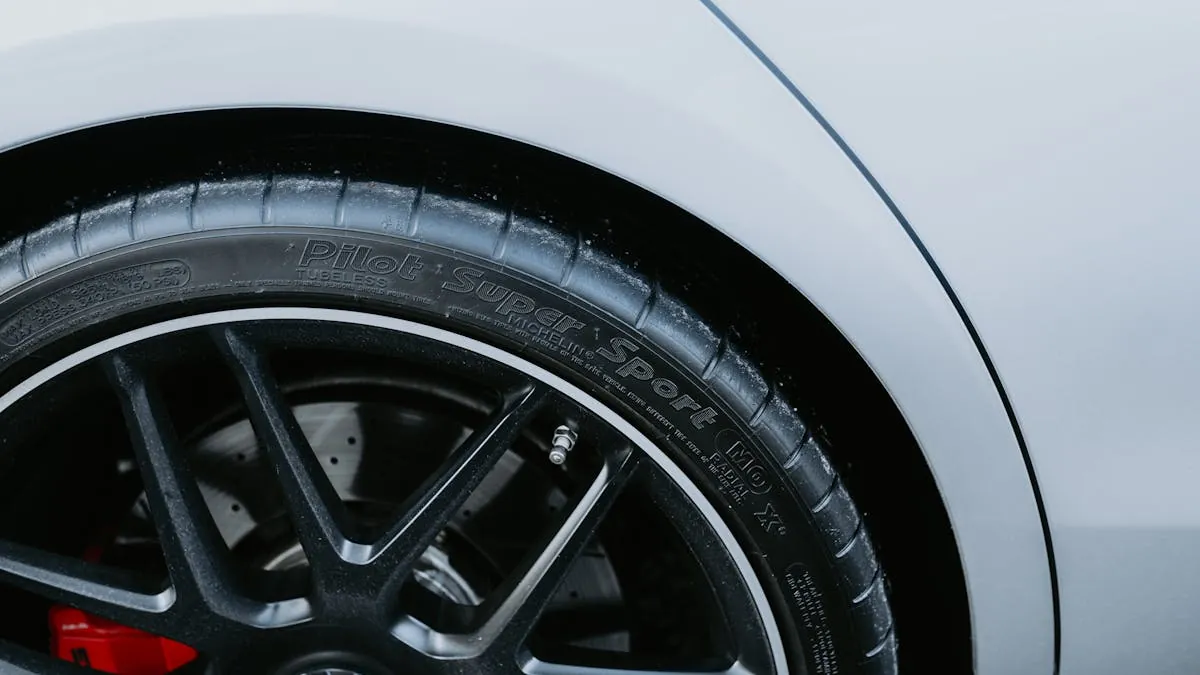
The longest-lasting tyres use harder, durable compounds and are usually premium touring tyres, and they can last far longer than a cheap tyre. Because tyre value is really about cost per mile, a long-life tyre often works out cheaper despite a higher price. The thing to watch is the trade-off: the very hardest-wearing tyres can give up a little outright grip.
What makes a tyre last
Tread life comes down to the compound and construction. Harder compounds wear more slowly, and premium makers engineer their touring tyres to last while still gripping well. Some tyres carry a high "treadwear" rating as a rough guide to durability. Premium touring ranges are the obvious place to look: Goodyear markets its EfficientGrip Performance 2 on mileage, and the Michelin Primacy 4+ and Continental PremiumContact 7 are built to hold their performance deep into the wear life. In independent testing, the longest-lasting tyres are often premium touring models, which is a big part of their appeal for high-mileage drivers.
The grip trade-off
There's a balance between longevity and grip. A very hard compound lasts a long time but may not grip quite as sharply, especially in the wet, as a softer performance tyre. The best long-life tyres manage both, lasting well without compromising wet braking. Avoid choosing a tyre purely on hardness, because safety, especially wet grip, must come first.
Your habits matter as much
The tyre is only half the story. Two drivers can get very different mileage from the same tyre depending on how they look after it. Correct pressures, regular rotation, good alignment and smooth driving can add thousands of miles to any tyre's life, see making tyres last longer. A premium long-life tyre on a neglected car won't reach its potential.
How to choose a long-life tyre
Look at independent test results for wear and longevity in your size, prioritise tyres that also grade well for wet grip, and weigh the price against the expected miles using cost per mile. For high mileage, a premium touring tyre is usually the longest-lasting and best-value choice; for low mileage, longevity matters less.
How many miles should a tyre last?
Most car tyres cover somewhere between 20,000 and 40,000 miles before they reach 3mm, with the spread explained by the tyre, the car and the driver.
A heavy SUV or a car with a lot of instant torque will sit at the lower end; a light hatchback on a premium touring tyre driven gently on A-roads can sit well above it.
The useful way to think about it is in millimetres rather than miles. A new tyre starts with around 8mm of tread. You should be planning replacement at 3mm, which leaves roughly 5mm of usable tread to spread across the tyre's life.
If a tyre has lost 2mm in its first 8,000 miles, it will not reach 25,000 before it needs changing, whatever the box said.
Three checks tell you whether your tyres are on course:
- Measure the tread at the same points every few months, using the 20p test or a cheap depth gauge, and note the reading.
- Compare front to rear. On a front-wheel-drive car the fronts wear noticeably faster, which is why rotating tyres evens the life out.
- Look at where it is wearing. A worn centre strip or both shoulders points to pressure; one shoulder points to alignment, see why tyres wear unevenly.
Treadwear ratings and what they miss
Some tyres carry a "treadwear" number moulded into the sidewall, often alongside "traction" and "temperature" grades. This is the American UTQG system, and it is worth understanding what it does and does not tell you.
The number is relative: a tyre rated 400 is expected to last roughly twice as long as one rated 200 in the manufacturer's own test. The catch is that each manufacturer runs and reports its own testing, so the figures are only reliable when comparing tyres from the same brand.
A 500 from one maker and a 400 from another may last the same distance on the road, or not.
The EU tyre label that appears on every tyre sold in the UK says nothing about wear at all. It grades rolling resistance and wet grip from A to E and gives the noise level in decibels, which is useful, but you cannot read longevity from it.
For that you need independent tests that measure wear directly, such as those from Which?, or manufacturer mileage claims backed by a warranty. Treat the sidewall number as a rough tie-breaker, not the deciding factor.
Long life versus the other things you want
Nobody buys a tyre for longevity alone. Wet grip, economy and noise all pull in slightly different directions, so it helps to be clear about which one matters most to you before you shop.
| If your priority is | What to look for | The trade-off |
|---|---|---|
| Longest life | Premium touring tyre with a mileage warranty; harder compound | Can give up a little outright grip in the wet; sometimes firmer ride |
| Wet safety | Wet-grip grade A or B on the EU label; strong wet-braking test results | Softer compounds may wear faster |
| Fuel economy | Rolling-resistance grade A or B, see fuel-efficient tyres | Low-resistance compounds are not always the longest lasting |
| Quiet cabin | Low decibel figure; touring rather than performance pattern | Quiet touring tyres tend to be long-lived, so little conflict here |
The good news is that the premium touring tyres that top longevity tests usually score well on noise and economy too. The one area never to compromise on is wet grip: a tyre that lasts 50,000 miles is no bargain if it adds several metres to your stopping distance in the rain.
When to stop counting the miles
A long-life tyre still has a finishing line, and it is not the legal minimum. UK law requires at least 1.6mm of tread across the central three-quarters of the tyre and around its full circumference; below that you face a fine of up to £2,500 and three penalty points per tyre, as set out on GOV.UK.
But wet braking deteriorates well before 1.6mm, which is why TyreSafe and most fitters advise changing at around 3mm.
Age counts too. A low-mileage car can wear a durable tyre so slowly that the rubber perishes before the tread runs out. Check the four-digit date code on the sidewall; fine cracking in the sidewall grooves is the sign to act on, regardless of tread.
And if you have been chasing longevity by running the tyres hard, remember that pressure does more for wear than any compound: a tyre run 20% under-inflated wears its shoulders and runs hot, and no touring tyre survives that for long.
We fit long-life tyres
We'll recommend a long-lasting tyre that still grips well for your car and fit it at your home or work across London and the Home Counties, and further out with the arrival time given on the call.
