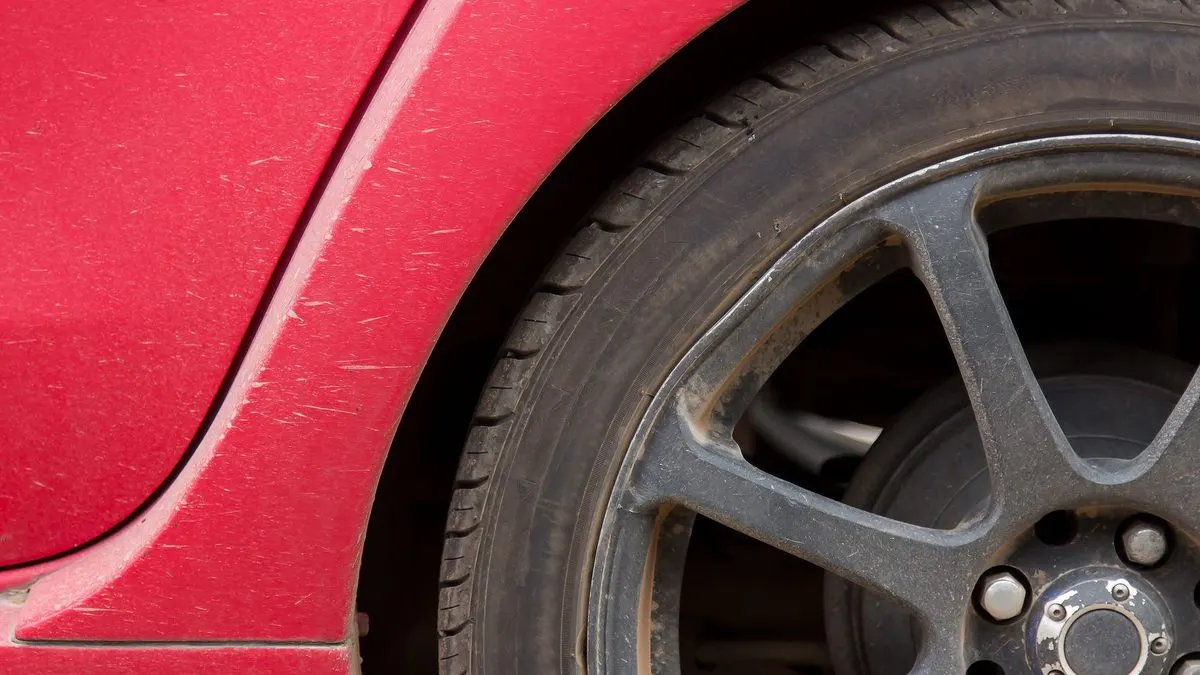
The key question with a damaged alloy is whether the damage is cosmetic or structural. This guide explains how to tell the two apart, what each type of refurbishment involves, and what to do about the tyres while the wheel is off.
Cosmetic vs structural damage
Cosmetic damage affects only the appearance: kerb rash on the rim edge, corrosion blistering the finish, peeling lacquer. Structural damage affects the wheel's integrity: cracks, splits, or a buckle from a hard pothole hit. The first is a job for refurbishment; the second is a safety matter where replacement is usually the right call.
When refurbishment works
Refurbishment, cleaning up the damage, repairing the surface and refinishing, makes sense when the wheel is sound underneath and you want it to look good again. It's cheaper than a new alloy and keeps a matched set looking right. For light kerb scuffs and corrosion, it's usually the sensible, economical choice. It also protects the wheel: once the lacquer is breached, road salt gets underneath and lifts it further each winter, so a refurbishment done early stops a cosmetic problem becoming a corroded bead seat and a slow leak later.
When to replace
Replace the wheel if there's any crack or split (which can fail without warning), a buckle severe enough that the wheel won't balance or hold air, or damage to the area where the tyre seals to the rim. Under the MOT rules a fracture or weld repair on a road wheel is a 'dangerous' defect, and a badly distorted wheel a 'major' one (source), which is also why cracks shouldn't simply be welded and refinished. A wheel is a structural part; once its integrity is in doubt, refinishing the surface doesn't fix the underlying problem, so replacement is the safe answer.
The tyre side of it
A buckled or corroded rim often shows up as a problem on the tyre side: a slow leak where the bead no longer seals, or vibration that balancing can't fix. If we find a wheel that won't seal or balance when fitting a tyre, we'll flag it, because the wheel, not the tyre, is the issue.
Types of alloy refurbishment
There are three common ways to refurbish an alloy, and they suit different damage and different finishes. The right one depends on how the wheel was originally finished and how far the damage has spread.
| Method | What happens | Best for | Limits |
|---|---|---|---|
| Cosmetic (smart) repair | Damage is filled, sanded and painted with the wheel usually still on the car | Light kerb rash on the outer rim edge | Colour match can be visible; does not treat corrosion under the lacquer |
| Full powder-coat refurbishment | Tyre off, old finish stripped, wheel cleaned and repaired, new coating baked on | Painted wheels, widespread corrosion, peeling lacquer | Wheel is off the car for a day or more |
| Diamond cutting | The face is machined on a lathe to a bright finish, then lacquered | Wheels that were diamond-cut from new | Each cut removes metal, so a wheel can only be cut a limited number of times |
Diamond-cut wheels deserve a note. The bright machined face looks superb but the lacquer over it is all that keeps water out, and once it breaks the corrosion spreads underneath as a milky bloom. That is why diamond-cut alloys often look worse sooner than painted ones after a UK winter.
A powder-coated finish is more forgiving, and some owners choose to have a diamond-cut wheel repainted instead of re-cut once it has been machined once or twice.
Whichever method you choose, ask what happens to the bead seat. A refurbishment that refinishes the face but leaves corrosion on the seat will still leak.
What to do about the tyres
A full refurbishment means the tyre comes off, so plan the tyre side of the job at the same time. Once the wheel is bare it is the cheapest possible moment to deal with anything else that needs the tyre removed.
- Worn tyres. If the tread is close to 3mm or the tyre is old, replacing it now saves a second stripping charge later.
- Valves. A new rubber valve should go in as a matter of course. Cars with direct TPMS need the sensor removed and refitted with a service kit, and the refurbisher must be told about it before the wheel goes into a stripping bath or oven. See tyre valve types.
- Bead seat. Ask for the seat to be cleaned back to sound metal, not just painted over.
- Balancing. A refinished wheel must be rebalanced when the tyre goes back on, because stripping and recoating change its weight distribution.
- Torque. The wheel nuts should be torqued to the manufacturer's figure on refitting, not tightened by feel.
If a refurbisher offers to refit the tyre at the same time, ask whether balancing is included. If not, we can balance and refit at your home or work.
Replacement options: OEM, replica and second-hand
If the wheel has to go, you have three routes, and each has a catch worth knowing.
Original equipment (OEM). A new wheel from the manufacturer matches the others exactly in size, offset, centre bore and load rating. It is the simplest safe answer and usually the most expensive.
Aftermarket replica. Wheels that copy the look of the original. Quality varies widely.
Check that the wheel carries a load rating suitable for your car, that the centre bore matches or a proper spigot ring is supplied, and that the offset is the same as the original. A wrong offset changes the track, can foul the arch or suspension, and loads the wheel bearing differently.
Second-hand original. Often the best value, particularly for an unusual finish. Before buying, check it for cracks, weld repairs and previous straightening.
Look at the inner rim flange for buckles, and if you can, have it spun on a balancer to see that it runs true. A used wheel with a hidden crack is exactly the risk you were trying to avoid.
You do not need to replace wheels in pairs for safety as long as the replacement is the same specification. The exception is where the old wheel was a non-standard size or width, in which case the tyres across that axle should also match.
If the tyre on the damaged wheel was run flat or scuffed against the rim, inspect it before it goes on the new wheel, since sidewall damage is not repairable.
How to decide: a quick checklist
Match what you can see and feel against this table and the answer is usually clear.
| What you have | Likely route |
|---|---|
| Scuffed rim edge, no vibration, holds pressure | Cosmetic or full refurbishment |
| Milky corrosion under the lacquer, slow leak at the bead | Full refurbishment with the bead seat cleaned |
| Vibration that balancing does not cure | Check for a buckle; straighten if minor and on the inner flange, otherwise replace |
| Any crack, split or previous weld | Replace |
| Buckle across the outer face or at the spokes | Replace |
| Damage to the bead seat itself | Replace unless a specialist confirms it can be machined true |
If the damage came from a pothole, keep the wheel and photographs, because a highway authority claim can cover the wheel as well as the tyre. Our pothole claim guide explains the process, and buckled wheel signs helps you tell a buckle from a balance problem before you spend anything.
We can help
We do not refurbish or straighten wheels ourselves. When we fit tyres we'll tell you honestly if a wheel is sound, needs refurbishment, or should be replaced on safety grounds, at your home or work. Our only base is at Brent Cross, NW2; tell us where the car is and we give you the arrival time on the call.
